|

Eco-Tourism v. Eco-Travel

Last night I dreamed that I was taking a group of yoga students to the Galapagos.  I was already on my way, and the dream information did not include the decision-making process that started the venture.  Instead of being excited, though, I was feeling anxious and guilty about bringing my inherently destructive presence (the one that eats, defecates, urinates, bathes, wears sunblock, requires built shelters, and, to travel, uses fossil fuels) to a place that we value for its uniqueness in nature and relatively pristine qualities.  I woke thinking it was absurd to have had that dream; couldn’t I have enjoyed myself just a little without feeling overwhelmed by questions, doubts, and guilt?  Why on earth did my unconscious serve this dream up for me?  Is it going to make me live a less environmentally conflicted life (that won’t even begin to happen until I move into a much smaller dwelling unit, my house being my biggest infringement on the environment)?  Probably not.

For Christmas this year, I’ll be doing my own version of eco-travel — going to New York City.  I’ll be taking the train both from DC to NYC and, on the day I go out to visit my parents, from the City to the Island.  To get around NY, I’ll walk or take public transporation.  I’ll eat mostly vegetarian/vegan food, some local and organic.  I’ll drink tap not bottled water (which is easy to do in NY).   I’ll have my bamboo utensils, cloth napkin and carry cup for the meals I don’t eat in a restaurant and my own carry bag.  I’ll have handkerchiefs instead of paper tissues.  I won’t have the hotel wash the linens until I leave.  Oh yes, I’ll be consuming and enjoying.  I’ll be eating and looking at art and seeing theater and/or music and/or dance and will inevitably do some shopping.

Where is your balance?  Are you comfortable with it?
Similar Posts

  • | | | |

    A Meditation on Patience

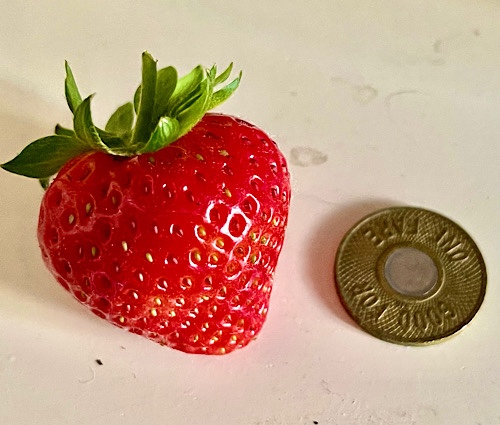
    When I decided to make strawberry towers part of the new sleeping porch garden extension, Niraj Ray of Cultivate the City told me to remove all of the flowers until mid-May to allow the plants to develop leaves large enough to support sizable and sweet berries. He also suggested feeding them every time I water.

    It has been a pleasure nurturing the plants and finally watching plump, juicy berries redden in the sun outside my study window.

    Might this delicious lesson in the benefits of being patient be a lesson applicable to how and when and why to re-emerge post vaccination, but before the end of the pandemic?

    Strawberry shown with old NYC subway token for scale
  • | | |

    Spirituality and Politics Do Mix (but maybe not at the Thanksgiving meal)

    Yesterday I received a rather negative email in response to my posting a suggestion on a list serve connected to a religious organization that people write to their elected officials about the health care bill pending in the Senate.  I sent the email because my contribution to this group is to serve as the designated liaison between a lobbying group that was established by the religious organization and the religious organization.  Once of month or so, I highlight issues that are the focus of the lobbying groups email campaigns.  The email took me to task for thinking that politics has any place in connection with spiritual practice and therefore the on-line discussion should never be about politics.  The person assured me that our political views were different, although I did not actually suggest what people should write; I only said that they should write.  I have been pondering this deeply as it is a topic I have thought about, taught about, and wrestled with deeply over the years, especially during the Presidential elections.

    As one who believes that body, mind, and community are inseparable from spirit, I am unable to separate political action from spiritual action.  I believe that I have a duty to be knowledgeable about the issues challenging society as a whole, to take action within the framework of society to seek the embodiment of my spiritual beliefs (grossly oversimplified, that the rules, commitments, and support networks of society should recognize the light of all beings — human and not — and foster the seeking of that light by all), and to challenge the very framework of the discussion and rules when they obscure the light and its recognition.

    One of the reasons for discussion is to explore, to learn, to be challenged, to expand both knowledge and understanding.  That can be a hard process.  I certainly do not expect people to agree with each other at all times, but that is not the point of discussion. While I think this sort of discussion perfectly appropriate in the context of a spiritual discussion, it might be less welcome where what is being sought is an immediate sense of peace and harmony in the connection of a particular practice.  For example, if it is known that family and friends have strong disagreements about “political” issues, it might be disagreeable for digestion and the day to bring up the issues at the Thanksgiving dinner table.

  • | |

    The Four Gates of Speech

    One of the  offerings in John Friend’s Anusara Teacher Training Manual, is the “four gates of speech,” which I believe comes from Buddhist practice.  The four gates are:

    1.  Is it truthful?

    2.  Is it necessary to say?

    3.  Is it the appropriate time?

    4.  Is it a kind thing to say?

    It is easy to see this application in terms of speaking with others, though not always easy to practice, especially in a group setting where the culture is to condemn and criticize.

    A more subtle practice of the four gates is how we talk to and about ourselves.  I am someone who was raised to have a very strong internal judging voice.  Although with the steady practice of yoga affirmation, my tendency for self-judgment has eased, the propensity reasserts itself when I am stressed.  I have taken to asking myself, when I hear the judging voice, does it pass the four gates of speech?  I find it a challenging practice, but a necessary one.  When we honor ourselves (we can honor ourselves and our own light and still know there are ways we would benefit from expanding or shifting), we will more easily honor, recognize, and affirm the light in others.

Leave a Reply

Your email address will not be published. Required fields are marked *

This site uses Akismet to reduce spam. Learn how your comment data is processed.