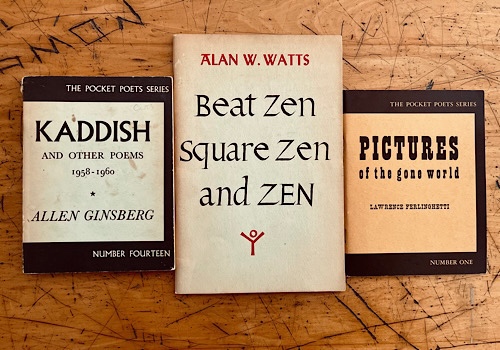
Divining Rod
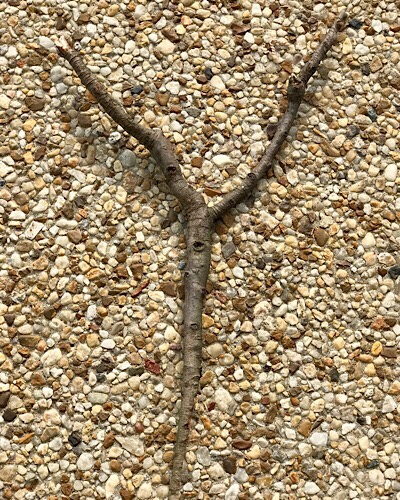
How are you manifesting your dharma these days?
I was reminded the other day of a principle of reading the great Hindu philosophical work: all of the meaning of the text can be understood from not only the first sutra, but the first word. The first sutra of The Yoga Sutrasof Patanjali’s is “atha yoga anusasanam” — now begins an exposition of the practices of yoga. Implicit in the “atha,” the now, is that something else has come before. The translations I have speak of previous study and preparation; the studies offered by Patanjali are not for the novice, but for one who has already been practicing. If we read Patanjali’s first sutra with the implicit understanding that the first word contains all of the exposition to follow and that we do not need the rest of the explanation and practice if we truly understand the first word and sutra, then I think more must be meant here by “atha” than just this exposition now comes after previous study.
In this latest contemplation of mine what the word “atha” must hold within it for the practitioner, I thought about the Anusara axiom of practice “the breath leads the way,” which has been the alignment focus in my classes for the past week. What does it mean to have the breath lead the way? At its highest level, it serves to bring us back to “first principle” of “opening to grace.” (As an aside, I note that I believe can apply to the Anusara principles of alignment the same method of understanding: the principle “open to grace,” and even the first word “open” holds all of the other Anusara principles. All the other principles and axioms are explanations and methods for living “open to grace.”)
When we let the breath lead the way, we start each pose by a deep listening, an openness to something greater, an openness to the pulsation between the universal energies and our individual self. We invite the subtle energies to support us and lead us like a great dance partner. We actively surrender to the dance, while still bringing our own skill to our part of the dance, the way the partner being led in a waltz is skilled both in the dance and in being led. In letting the breath lead the way in our yoga practice, we come to the very fullness of the present moment even as we move through a sequence of asanas in time and space. Being open to grace in each moment, in each part of the pose, and allowing our self to be led by the pulsation of the breath even as we move with it, brings us to a recognition that in each moment, we are both part of the sequence of time and space and more than time and space (akrama krama). We come to the atha of samadhi. We use the practice of letting the breath lead the way to teach us to open to grace, to find the exquisite timeless fullness of being itself in order to illuminate all of our practice. If we are already in that atha, that now, then we do not need any of the other practices or explanations, but if we cannot find it on our own, then again and again, the study and practice begins now — atha — so that we can experience in our very heart the fullness (purna) of our selves and better illuminate everything we do on and off the mat with the blissfulness of that fullness.
Have you let the President know that you are against allowing any new pipelines and/or engaged in other action?

It is too far from my current world and beyond my temporal limits at the moment, but if you are interested, please contact my friend Robin through the website link below, who writes:
Dear Friends and Colleagues,
Take care and thanks so much, Robin