In Memoriam
Last night, after a long work day, for no particular reason, I found myself in my study, dipping into books by Mary Oliver. Tonight I return with more intention. Much of her writing will, no doubt, continue to speak to me.
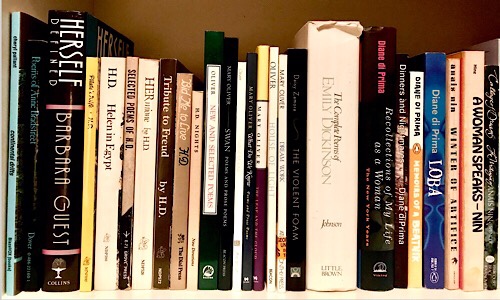
Last night, after a long work day, for no particular reason, I found myself in my study, dipping into books by Mary Oliver. Tonight I return with more intention. Much of her writing will, no doubt, continue to speak to me.
I get lots of emails asking me to engage in e-activism — write letters to Congress, write letters to corporate executives, write letters to the President, sign petitions — and, of course, requests for donations. The requests I get are from a wide range of public interest organizations, including environmental, women’s rights, peace, civil rights, worker’s rights, care for animals and other wildlife, organic food, good science, enhancing education, the list goes on. Sometimes I just hit the delete button. Sometimes I sign the petition. Sometimes I hit the send button on the form letter. Sometimes I edit the letter personally to make it a more powerful statement. Sometimes I give money. Sometimes I both write and give money. Sometimes I learn something that invites me to change how I consume or invest my money, and I try to make a shift.
I received an email today from the Rainforest Action Network asking me if I would make a pledge to help end mountain top removal. I power my electricity with 100% wind energy, now through Clean Currents, so I am not using coal-powered electricity myself at home. I sent RAN another donation; I really believe in what they do. I also agreed to do a blog post on why it is important to end mountaintop coal mining as part of my pledge. It’s utter and nearly permanent devastation is horrifying and wakens me to the repercussions of consumption without conscious knowledge of the impact. Seeing the pictures makes me think about everything I consume (and I am already an overthinker). I welcomed the invitation to pledge to spread the word.
In yoga, the concept of “sangha” or community carries with it the meaning that you become those with whom you keep company (so therefore keep good company). I subscribe to all these activist list serves and seek out those who are more engaged than am I, so that I will be inspired progressively to live with more consciousness. I thank RAN for inspiring me to extend the invitation to look more closely at how we can shift our energy consumption still to enjoy reasonable fruits of our technology, but not in a way that destroys the possibility of a good life for others in the present and for eons into the future.
I read today a piece in the Washington Post about Hindus needing to “take back” yoga. I read the article and the comments with great interest because it has been a matter of much discussion with those in my meditation and philosophy course as to the extent to which the practices we are learning are “religious” practices and whether they can be practiced consistently with other religions. There is much difference of opinion and strongly heated and held positions.
What I think is missing from the article is the question of distinctions between “spiritual” and “religious” practices. It is a simple fact that practicing yoga with depth and sincerity entails learning practices that are observed by Hindus. Does that make one a Hindu? Does it mean that one is “dissing” Hinduism if one learns and benefits from the practices, but does not self-identify as a Hindu.
What about Jews who have trees at the Christmas holidays (a tradition co-opted from the pagans in any event)? Is it OK that I have a mezuzuh even though my parents (who were born Jews) raised me in the Religious Society of Friends (Quakers), and I continue to be a member of a Quaker meeting, and observe no other Jewish laws or practices.
Is it OK for me to chant “Hindu” chants if I do not identify myself as a Hindu or attend Hindu temple? If it is not OK, for whom is it not OK? Quakers? Hindus? Jews? Me? Who is to decide or judge?
It seems to me that “religion” (as specific sects, identities, and strict rules) tends to highlight difference and disunity, but sincere spiritual practice — whether or not done in a religious context and observance — should be unifying because all religions at their highest and most universal, call upon us to recognize the unity of spirit in ourselves and in all beings.