Asana, Pranayama, and Yoga Practice | Food for the Mind (Yoga Philosophy, etc) | Meditation | Quaker
On the Way to William Penn House for Tuesday Night Yoga Practice
And “atha yoga anusasanam”?
And “atha yoga anusasanam”?
Last week Orie suggested that as I have a “Yoga for Gardeners” workshop, I should also do a “Yoga of Housekeeping” workshop. A blog post isn’t a workshop, but here are a few preliminary thoughts on yoga and housekeeping.
From an alignment perspective, I have found that the Anusara principles of alignment make safe everything I do off the mat, as well as on. Overwhelmed by all that needs to be done? Doing heavy lifting? Bending and stooping? Reaching for something way up high?
First, soften (open to grace). Appreciate that you have a home and things to clean. Honor each item in the house. Things have energy, too., and they like to be touched and cleaned. If you have anything that you do not appreciate or does not fit in the house, give it a new life in a new home (freecycledc is a great way to pass things forward).
Use muscular energy, drawing the muscles to the bone, hugging into the mid-line, and drawing energy into the focal point (for most housecleaning activities, this will be the pelvis). Using muscle energy will definitely help to keep you from tweaking a muscle or straining the low back or shoulders. When you are reaching, keep the arm bones integrated by hugging the shoulder blades onto the back and then reach from the waist, though each rib to extend the length of your torso (organic energy).
Especially for bending and lifting, after you bend your knees, hug your shins in (muscular energy), take your inner thighs back and apart (inner spiral) and then tuck your tailbone (outer spiral). If you just bend from the knees but hunch your back, your low back will still be vulnerable.
Switch sides for activities like sweeping, vaccuuming, and scrubbing. Yes, it can be difficult and awkward, but it’s worth it to shift sides. Imagine doing all of your yoga practice only on one side. How much imbalance would you be encouraging?
The first niyama of Patanjali’s Yoga Sutras is sauca, which means cleanliness or purity. It is easier to think and live and be hospitable in a clean home.
The first yama is ahimsa, or non-harming. Do your best to use safe, biodegradable cleaning products. Your skin and respiratory system will be grateful. So will the earth. Try to make cleaning your own space and act of honoring your self, your home, and the greater home of the earth.
Fully absorb yourself in the task of cleaning. Make it a meditation. Integrate fully the act of cleaning, the item being cleaned, and you as the cleaner.
Finally, be playful.
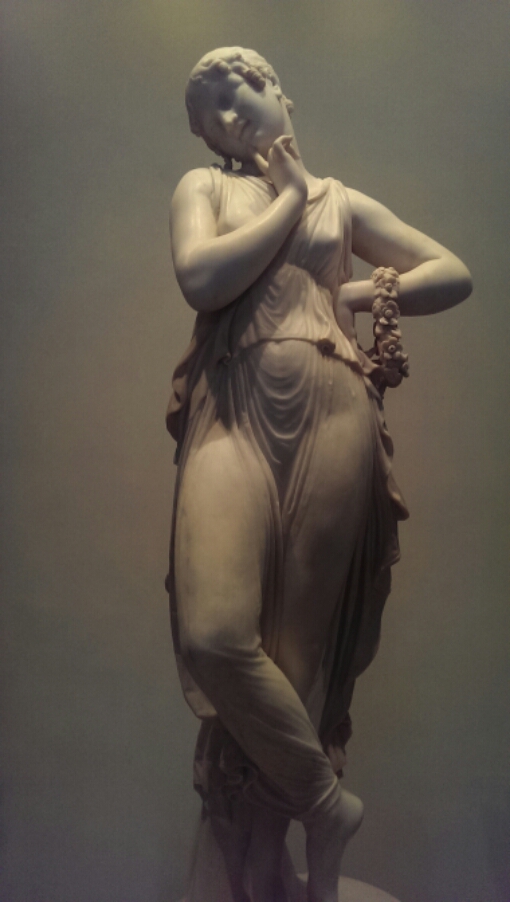
I was feeling a bit melancholy at work this morning, so I went across the street at lunchtime and soaked up some beauty.
I am indeed blessed (by a combination of conscious choice and effort and good fortune) that I am able to take a lunch break on many days and that there are multiple opportunities to connect to beauty steps from work and home.
I saw a hawk when I was walking to work this morning. It was in one of those stately oak trees in the park just north of the US Capitol. I have occasionally seen hawks in the neighborhood alleys, but never one at the Capitol. The hawk stood out for two reasons: it was very large, and it was the only living being about. Usually, there are a number of squirrels, pigeons, and maybe crows, sparrows, and common grackles about the park. This morning, it was unearthly quiet; all of the other animals and birds were all in hiding. It was probably a red-tailed hawk. As I stood to watch this special being, a woman walked past me with her head hunched down, her hands shoved in her pockets, her briefcase weighing down her shoulder, and her face preoccupied, a common going to work look. I called out to her, “look, a hawk.” She was startled, maybe even a little upset at first that I had interrupted her thoughts, but then she, too, stopped and watched. When I finally continued on to work, she stayed watching for a while, and she no longer looked preoccupied. At the bottom of the steps of the park, I went past the police, who are there every morning with their cars parked on the sidewalk (blocking the way). The police rarely say hello. One of the cops, who had his dog out of the car, called out a good morning to me today, though. I greeted him back, “good morning, did you see the hawk?” “Yes, I’ve been watching it,” he said. We had a nice chat about the hawk and about his being able to watch the bald eagles at Blue Fields in Virginia, where they do the training for the police dogs.
It would have been easy for me not to see the hawk. I use my morning walk as a time for contemplation, and when I am in the park (leaving aside the Architect of the Capitol vehicles that sometimes intrude), it is a time I can be less careful about traffic and be more inward. But it is also a time to look and to appreciate the opportunity to be outside, whatever the weather and the season. The trees and birds and small animals and plantings and sky look different everyday. While I go inward on my morning walk, I am also always noticing. This is a kind of mindfulness — to be able to be resting with inward attention, but still be open to observing whatever is in view. Is it less mindful to be so drawn inward that the outside disappears? That perhaps depends on whether one has deliberately gone so far inward that the outside ceases to exist for a time, which is a meditation method, or whether one is just so preoccupied with the churning of the mind that one becomes less conscious.