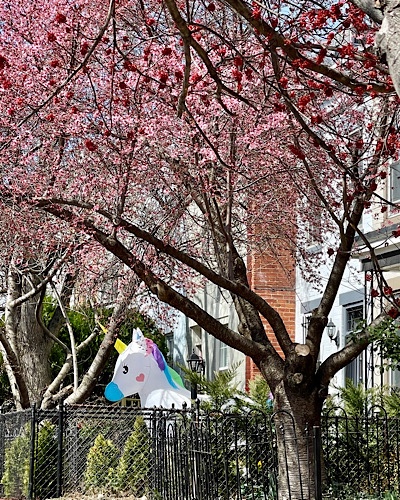
Sometimes
Sometimes when I find myself getting anxious about having to do something, the best way to ease the anxiety is to start getting the thing done, than to continue thinking about doing it.
What about you?
Sometimes when I find myself getting anxious about having to do something, the best way to ease the anxiety is to start getting the thing done, than to continue thinking about doing it.
What about you?
Sometimes it is hard to tell whether our actions are making a difference. Yoga would have us do it for the sake of the action, not the result.
Today I ordered my first batch of postcards to reach out to voters in swing states: https://www.turnoutpac.org/postcards-faq/ in addition to giving additional contributions to my regular monthly support.
May what we do bring more happiness, safety, and health for all.
Svadharma, from sva (self) and dharma (duty) means our personal path, duty, calling, or place. The principle of svadharma is a significant teaching in various yoga texts, such as the Bhagavad Gita, especially emphasizing the importance in acting in accordance with one’s caste (for example, Arjuna needing to act in accordance with his dharma as a warrior) or one’s sex (consider Sita’s role in the Ramayana).
Extrapolating this teaching and taking it onto the mat, during one of the practice sessions the previous week at the Certified Teachers’ Gathering, John Friend said that “every part of the the body has its own svadharma to increase the pranic flow.” He then said that if you just took a photo of the feet of an Anusara yoga practitioner in any pose, you should be able to see that the whole body was fully engaged and active. John Friend’s teaching here was not just using the yoga philosophy as a catalyst to better understand the body. By using the principle to illuminate the practice, the practice reflectively illuminated the principle itself, without denying or denigrating its original context or getting bogged down in its historical baggage of perpetuating the caste system and demarcated, subservient roles for women.
Thinking about the svadharma of the pinky toe has no such baggage. The pinky toes are homely looking things, they do not fit well into most women’s shoes, they rather painfully bump into things, and they are hard to move independently. They are not essential for living and do not have the emotional charge of the heart and brain, the exquisite connection to the world of the sense organs, or the connection to life itself of the lungs. Despite this, the call to lift and spread the toes, to draw the pinky toe toward the heel, or the hip happens just about every time I go to the mat in my practice or teach a class. Activating the pinky toe by opening it and spreading it apart from the other toes is a conscious act of opening that helps hug the shins to the midline. In hugging the shins in by means of activating the pinky toe, the yogi on the mat can then safely move the thighs back and apart, creating an expansion of the pelvic floor that provides room for more strongly tucking under the tailbone to access core power. The pinky toe thus is an important part of our practice, even if we could manage to get by without it.
But the svadharma of the pinky toe on the mat is not just to be able to help us access the movement of “shins in” so that we can better do “thighs out,” although that is an important physical part of its essence. The toe does not move on its own. We have to start by bringing our awareness and consciousness to the toe. Part of the pinky toe’s svadharma, then, is to invite the infusion of consciousness to show how full participation of even an apparently insignificant part of the body can lead us to a better understanding and personal experience of the pulsation between reaching out and hugging in and affirming ourselves. By intentionally bringing our awareness to the power we can unleash in the pose by the movement of the pinky toe, we bring the opportunity for greater strength, expansion, and flow of energies. This is why, I think, John Friend suggested that by just seeing the toes we should be able to know the engagement of the whole body and mind in a particular pose.
As a practical and therapeutic matter, recognizing and bringing into play the svadharma of each and every part of the body serves to help us increase the flow of energy and expand our range of movement. In addition, activating the parts of the body that are inclined to slack (for example, the pinky toe or the adductor and abdominal muscles) will bring ease to the muscles that tend to overwork to compensate, such as the neck and low back muscles. We are not just stronger and more flexible when every part of the body does fulfills its svadharma, but we eliminate much pain and suffering. (More to come on this particular concept in other posts.)
Off the mat, when all parts of the whole are fully conscious of and know their svadharma, the whole will itself have more consciousness, more light, and better experience the bliss of being. It is easy to see, without judgment or question, that the pinky toe cannot do the work of the heart, although when the pinky toe is working it can help contribute to an integration of mind and body that will further the opening of the heart and thus the whole person. Finding our svadharma as a whole person within society does not have to be about conforming to preconceived social norms that no longer serve. The better we are able to understand where we are in time, space, and the interconnected web of being, though, the more fully we can participate in leading society itself to a more conscious and light-filled place, just as bringing our conscious awareness to the actions of the pinky toe can do the same for us as individual yogis on the mat. When we recognize and live out our true svadharma as such, we radically affirm ourselves, the community, and the very essence of all being.
I have noticed over the years that I sleep more deeply and peacefully if I have made the bed before getting into it again. Smoothing out the sheets and the covers and fluffing the pillows after waking, releases the energy of the dreams from the previous night. This helps make sure that each returning to sleep is a new experience, an opening to the possibility of entering a wonderful state.
The principle of sauca (cleanliness or purity) invites us to be clean and clear before and as part of our physical and meditative practice and all our living. Imagine trying to practice yoga on a dirty mat and going into savasana (corpse pose/final relaxation) on a tangled blanket. Would you think it possible to become deeply relaxed? Probably not. If we want our space smooth to lie down for a yoga pose, how could we not need the same for a good night’s sleep, for a planned visit to another state of consciousness?
Dear Friends,
It has been a longer winter than usual for DC, but that will make spring even more special. This month is filled with opportunities to start to flower along with everything around us, including your own garden.
Tuesday night Wm Penn House classes are always available for all levels on a drop-in basis with special pricing for not-for-profit workers, students, seniors, and those between jobs. Drop-ins also welcome any time at Willow Street Yoga — level 2 at 8:30 am (great way to start your weekend) and gentle/therapeutics at noon every Saturday.
On Saturday, March 13th, on the eve of Daylight Savings time, come join yogins and gardeners alike at this year’s Yoga for Gardeners. 2:30 PM – 5:00 PM, Willow Street Yoga Center, Takoma Park, $40.00. Whether this is your first time taking the workshop or a repeat visit for the love of yoga and gardening, get ready to grow, align, cultivate, and rejuvenate mind, body, and spirit with joyous anticipation of spring and the coming gardening season! Suitable for novice and experienced yogis and gardeners alike, this workshop shows ways to align most optimally when digging into the dirt and also provide an opportunity for your true self to blossom. I will bel donating a portion of her profits to benefit the Youth Garden at the National Arboretum, so coming to the workshop will be yet another way to foster gardeners and gardens in the city. To register, please visit www.willowstreetyoga.com.
The third Saturday of the month wouldn’t be the same without the Serenity Saturday restorative workshop from 3-5 at Capitol Hill Yoga. This month will be extra special invitation to welcome the light on the Spring Equinox. For more information and to register, please visit www.capitolhillyoga.com.
Coming in April, along with the usual array, I’ll be teaching one of the special charity classes at Capitol Hill Yoga on Sunday, April 4th, from 3-4:30. Details to come.
Stay warm, enjoy the new budding of spring, and the last of the snow and winds of winter. Looking forward to seeing you soon.
Peace and light,
Elizabeth
One of the things I am most grateful for in these times is the support of the various practices of yoga, and as I find that gratitude nourishes generosity, with my friend Suzann Lynch, I will be offering an all-levels, all ages on-line yoga practice on Thanksgiving morning.
Time: 10:00-11:30am
Date: Thursday, November 26
Register by signing up through this link: https://www.
Please feel free to invite friends and family–whether or not you’ll be in the same space.
Suzanne and I plan to sign in 30 minutes early and stay on afterward so that there is time to connect via video and chat.
Hope to share the practices with many of you.
This site uses Akismet to reduce spam. Learn how your comment data is processed.
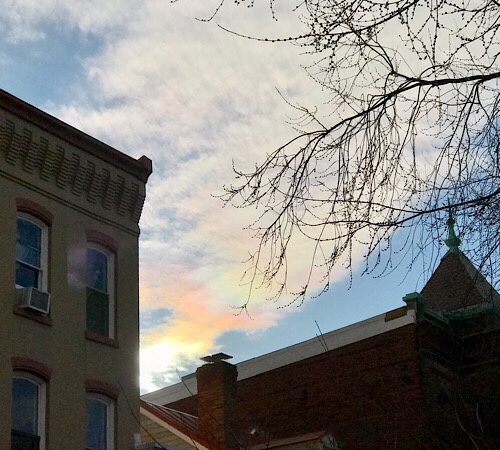
Positively! What ever it is that’s bothering you – a paper to write, a bill to pay, an apology to a friend…it’s really better (almost always) to just get started.