Art and Culture | Asana, Pranayama, and Yoga Practice | Community and Family | Gardening | Meditation | Photos
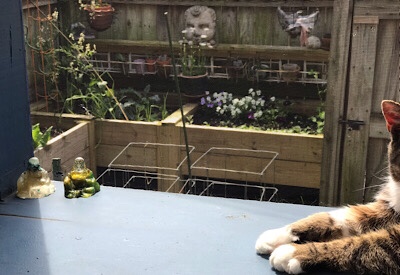
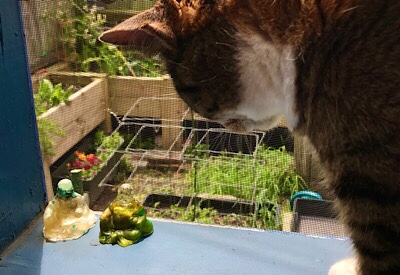
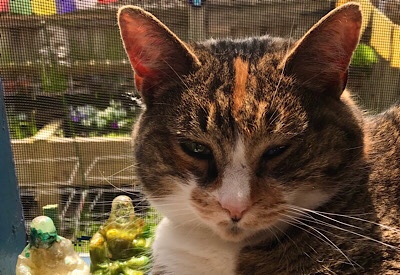
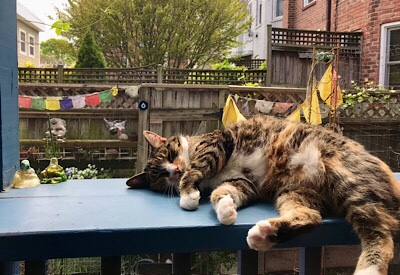
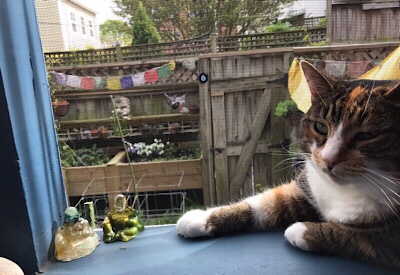
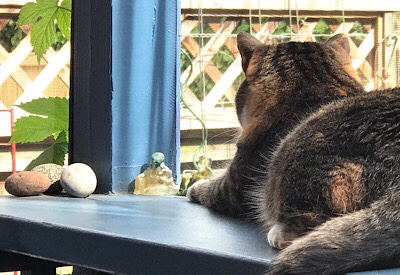
Maitri and the Cloudy and Clear-Headed Buddhas (All of Whom Wanted to Be Outside Today)
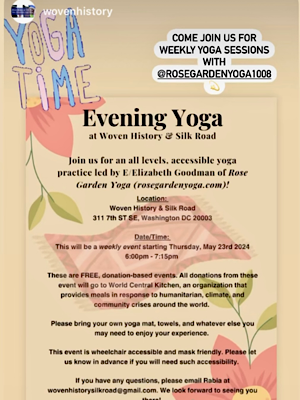
Thanks to the gracious hosting by Woven History and Silk Road, I will be offering my first public, weekly yoga practice, since the beginning of the pandemic.
It’s an all-levels, accessible, mask positive, donate what you may, yoga practice. We’ve chosen to begin with World Central Kitchen in recognition of those struggling to get food in too much of this world of which we are a part.
The practice will be Thursday nights from 6:00-7:15pm. We will practice either outside (weather and mosquito permitting) on the back patio (brick) or in the shop (carpet floor). Please bring what props you like for practice. It’s great to have at least a towel to have something personal to lie down on for any recumbent poses.
What we will practice will depend on who is there and what are the needs and wants of the day. Expect some combination of breathing practices, meditation, and movement focused on facilitating our embodied experience.
Woven History is at 311 7th Street, Southeast, between Eastern Market and the metro.
For questions about the space, including access (the front has a few steps), please contact Rabia at Woven History Road@gmail.com. For questions about the practice, please contact me or comment on this post.
Yesterday I looked at the continuing news about the crash. Among all the other stories, it seemed fairly unlikely that there would be metro service between Capitol Hill and Takoma Park by the weekend. This created a complication for me. Living without a car and commuting a number of times a week to Takoma Park to teach and take class, I had to figure out how to get there. It will be easy enough (I think) to get to Willow Street on Saturday to teach by taxi cab and to find a bus combination to get home.
In addition to teaching, though, I had been looking forward to studying with Amy Ippoliti on Friday night and Sunday morning. I could take a taxi and a bus combination to study with Amy this weekend or just forego my tuition. All that would be easy enough. But I had invited a friend to come and visit to take the whole weekend with Amy — which includes another 12 hours of teacher training on Saturday and Sunday, where I will be off doing my own thing. Since my friend and I will have very different schedules for this yoga weekend, and neither of us are much of a driver, renting a car was not really a viable option. I thought about just staying in a hotel in Silver Spring.
Then I got to my personal yoga. One of the hardest things for me to do is to ask for help (of almost any kind). I am good at offering to help and am good at both helping when asked and saying I cannot help (the latter took some practice). What I know from being a “helper” is that I get great joy from giving and offering assistance. My never asking, then, means not giving those in my life the joy of providing assistance. I overcame my deeply ingrained reluctance and asked for help. Not big help. Just is there someone already attending the training who can give a ride from the workshop into the District each night or provide an extra bed for my friend. Fellow yogis were indeed happy to help; there are now a surfeit of options.
The minor inconvenience to me from this tragedy reminded me again to send healing energy to those who are suffering and to see things in perspective. I was given a sweet reminder of the warmth and generosity of my yoga friends and colleagues. I was able to practice with success addressing one of my continuing challenges. I have been blessed, then, in the aftermath. Contemplating these gifts with gratitude gives me more energy to send out for those in need.
For those of you who are local, I think there is still space in the workshop with Amy: come join us for all level hip openers on Friday night and intermediate/advanced backbends and standing poses on Sunday morning. See link to Willow Street above for more information.
Your guess is as good as mine.

Peace and light, E — Posted with WordPress for BlackBerry.
A storm has decided to stop and hang out for a few days, which is good, because we really needed the rain here inside the Beltway.