Found Exhortation


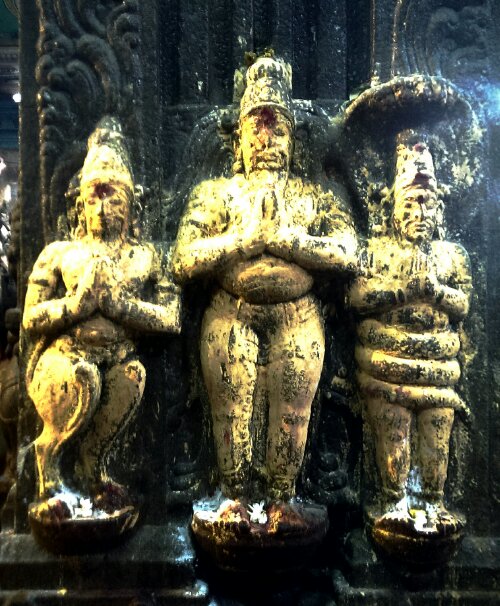
Hanuman, the monkey god, is one who reminds us to serve. When Hanuman was a kid, he was rather full of himself. That was not surprising, really, as he had wonderful and magical powers of strength and agility. When he got too audacious playing with his powers against the bigger gods, he was cursed to be able to remember his powers only when he was serving with true love and devotion. When he was serving Ram and Sita, then, the full force of his powers were available to him to help in their dilemma. (Yes, this is a rather creative summation).
Some of my strongest memories from childhood were observing my father when he was providing draft counseling for those conscripted to fight in the Vietnam War. My father did not talk on the phone because it was tapped, but we heard a lot of conversations about whether to be a soldier, be a conscientious objector, find a basis for deferral, or otherwise protest or avoid the draft. Although I was raised to think that war did not serve humanity (though my parents engaged in debates about whether all wars were bad, discussing the difference between fighting against Hitler and fighting in Vietnam), I was also raised to believe strongly that we all have a duty to serve. I meet many in the military here in Washington, DC. What I find is that those who have chosen military life have a strong sense of service. Even if I do not believe in most of the basis of the service (just as I don’t hold much truck with whom Sita was expected to be and the basis of the battles in the Ramayana — more on that some other time perhaps), I respect that those who were conscripted and felt they had no alternative or those who chose to be in the military put their lives on the line to serve.
I try to think of Memorial Day as honoring those who have served and not, as I did when I was younger, dismiss it because it was more societal indoctrination to perpetuate the war machine. When Natalie and Joe Miller invited those at Willow Street to join them in service by helping to clean up part of Long Branch Creek, I signed up. I appreciated their way of making it easy both to honor peace (by helping the environment) and those who have served (by ourselves serving). We will be taking our yoga of the mat and into the world with a morning of seva— selfless service.
When I googled (that should not be a verb) “holiday madness” this morning, I got one million three hundred thousand hits. Yikes! Most relevant websites are about surviving shopping, over-eating, family, and travel. Madness in such a situation is a choice. We can choose what to consume, how much, when, and with whom. It is a choice whether “celebration” requires consumption beyond what our financial, physical, and emotional means permit.
The yamas and niyamas as revealed by Patanjali provide beautiful structure for thinking about the holidays.
Yamas:
Ahimsa–non-harming. Don’t consume more than is harmful to yourself, those who have created what you are consuming, and the earth.
Satya — truthfulness. Be honest with yourself about what is right for you to celebrate and observe and what brings meaning to you as a holiday celebration.
Asteya — non-stealing. Consuming beyond your means, especially financially, is a form of stealing (look at what generated the recession).
Brahmacharya — moderation (aligning with Brahma). Enjoy the offerings of the earth in a way that uplifts rather than sickens or detracts from spirit and self.
Aparigraha — non-greediness; non-covetousness. Enjoy what you have without coveting or trying in a detrimental way to have what others have and you do not.
Niyamas
Sauca — cleanliness, purity. Consume in a way that is healthy for yourself and the planet, that does not create illness, refuse, and waste.
Samtosha — contentment. Wherever you are, whatever you have, whatever is going on in your work and family life, think of that for which you are grateful, that which brings you happiness, and focus on what you have. Contentment is a practice.
Tapas — fire, ardor. Be on fire to practice, to shift, to make this a life-fulfilling year of generosity and compassion.
Svadyaya — study of text, self-study. Take the holidays as an opportunity to deepen your understanding of yourself, society, and your spiritual beliefs and how they interrelate.
Ishvara pranadhana — surrender, recognition of the spirit. Let go a little. Surrender to a sense of fullness. Allow the abundance and recognize it as a wondrous gift. Remember the word “holiday” is really two words: “holy day.” Make this time holy, whether or not you observe a particular religious tradition at this time of year or any other.
I spent most of the day working in the garden. As the darkness of the eclipse encroached, I thought what it would be like if I had not known in advance that it was coming.
Would I have known enough to heed the crows?
I sat with Ganesha, in the aspect of the one who can reveal to practitioners a skillful path amidst the obstacles that necessarily arise from the churning of space and time by the 12 Kalis and which are intrinsic to the fabric of the tandava generated by Siva Nataraja.