Asana, Pranayama, and Yoga Practice | Food for the Mind (Yoga Philosophy, etc) | Meditation | Photos
Be Here Now (Var.)
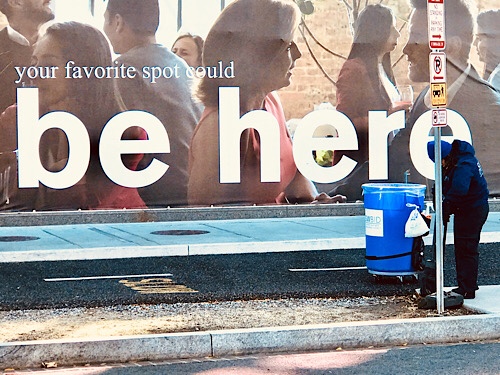

In the window at Clothes Encounters–a woman-owned small business on Capitol Hill. I wasn’t feeling the need to bring anything new into my closet, but I went in to say how much I liked the sign. I enjoyed trying on a tourmaline necklace that looked like it came from India.
Last week I attended via Zoom a “Yoga for Palestine” workshop hosted by ABCD Yoga. I appreciated the level of scholarship and detail and getting to hear South Asian perspectives and interpretations.
I highly recommend reading Sheena Sood’s paper on “Omwashing” and checking out the offerings of ABCD Yoga.
Last night at group practice, after doing a centering focused on using yoga to dissolve samskaras (see yesterday’s blog post on this topic), I told the group how I had been inspired by a Facebook exchange between Noah Maze and Desiree Rumbaugh — stalwart beacons of inspiration to the Anusara community — about the benefits of doing 108 sun salutations with four two-minute handstands interspersed in the practice. I then had everyone come to the front of the sticky mat, hands in front of their hearts and began. For the first five (surya namaskar A), all I did was call out the poses and the breathing and count, though I almost never teach sun salutations without enough breaths per pose to be able to think about alignment. For the next few salutations, I started throwing in some variations. As we continued, I started asking the students to notice their alignment. Were the places where they are challenged with alignment starting to show up? (Yes, most definitely so.)
After the 16th salutation, I revealed that we could not possibly fit in 108 salutations into the practice time. I advised that we will do handstand at 16 instead of 32. We then went into handstand, with students having the option of half handstand or full handstand. I remained quiet for the first 45 seconds and then started calling out the time in 15-second intervals. For students who needed to come down, I suggested they try to go back up until the two minutes were over, even if it took multiple tries. The timed handstand generated all sorts of groaning and commentary, but it all had a light-hearted enthusiasm for being invited to a challenge.
After the handstand, we got going again. “Are your knees hyperextending?” I asked one student for whom that is a tendency. “Kidneys full?” I asked of another. “Root your index finger knuckle; shoulders up in chaturanga” was a good reminder for those getting tired. I threw in more variations to slow things down and to give more time to be careful with the alignment. There is no point in an elective challenges if it is going to cause injury.
It was becoming progressively more obvious that the more we pushed ourselves, the more the places where our bodies most habitually misaligned were starting to go (just the way our less than optimal emotional tendencies start coming into play when we are faced with upheaval and loss if we do not stay conscious and try to remain in alignment with spirit). “Are you still opening to grace?” I asked after a few more rounds. Everyone laughed and found renewed strength to stay in alignment and to keep up the practice.
After several more, with only 15 minutes remaining for the class before allowing time for meditation and savasana (final relaxation), I took the class from adho mukha svanasana (downward facing dog) to balasana (child’s pose). What a rush of relief and ecstasy! “Just enjoy,” I suggested. “We need to be able to take the moments of grace, of respite, of sweetness, of pause, and not fritter them away worrying about what just happened or what is to come. Knowing how to do that is one of the blessings of yoga and one of the ways we can prevent samskaric build up.
We then moved into a cool down. With the various challenges of embodiment with which this group was working and the time limitations, a full 108 salutations with the corresponding handstands would not have been appropriate for this particular practice. But everyone left both exhilarated and more relaxed for having mindfully challenged themselves, seeking to stay aligned while not knowing just how much of that daunting number the teacher would ask of them.
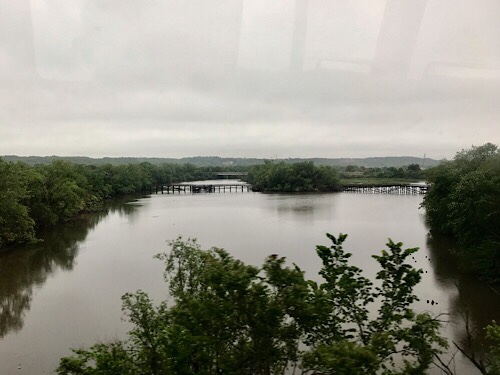
Looking in the opposite direction from yesterday.
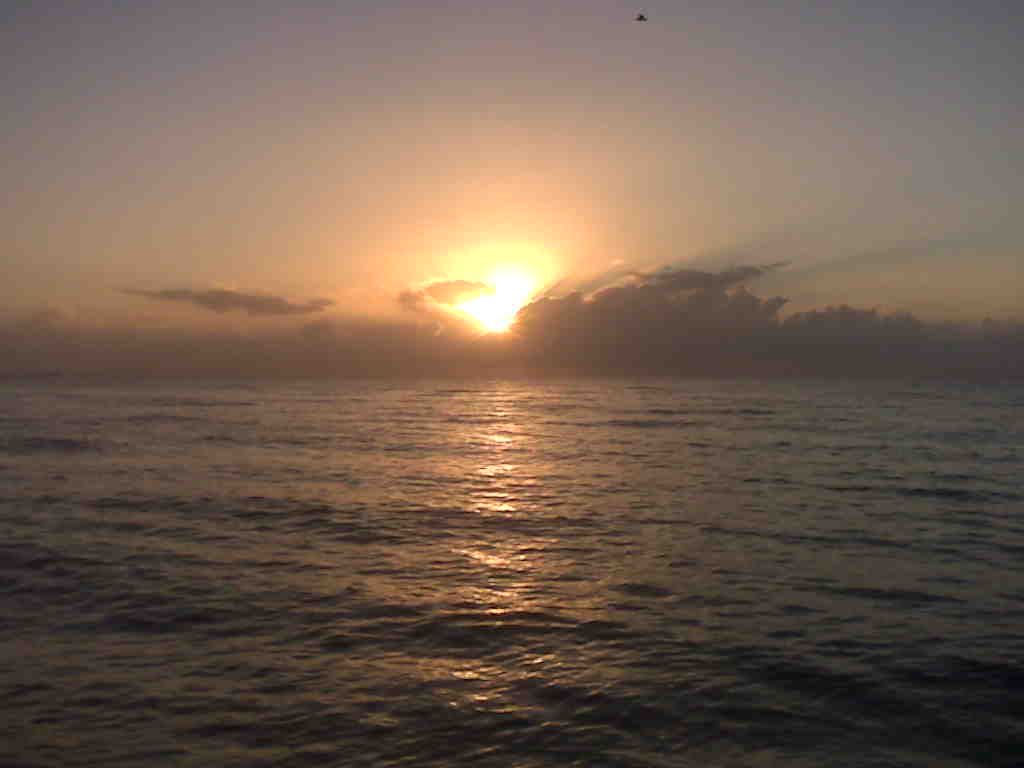
When the sun first appeared over the horizon, it was obscured by a low lying bank of clouds. As the sun came up, it gave beauty even to the clouds–illuminating and beautifying that part of our vision of the light that was clouded. When the sun rose high enough, the clouds at the horizon were scarcely noticeable in the bright light of day.