Found Exhortation
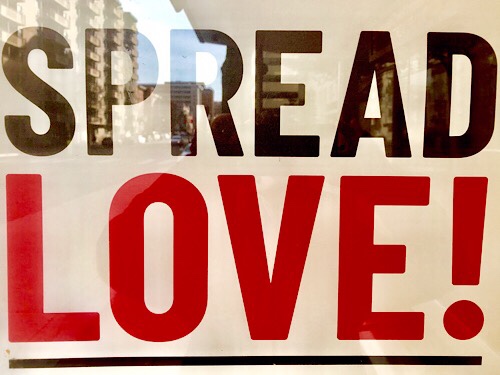
There always seem to be heart shapes when I am walking over to William Penn House to lead the Tuesday night yoga practice. In the winter it is dark walking to practice. In the summer it is still light walking home. This evening I noticed how much earlier dusk is now coming than it did at the solstice.

Peace and light, E — Posted with WordPress for BlackBerry.
Last week, I used as a theme sukha — ease, comfort, happiness. I was inspired by Lorin Roche’s discussion of translating in his “version” of the Vijnana Bhairava, which he entitles “The Radiance Sutras.” In it he notes that “[e]ven more literally, sukha is (according to some etymologies) composed of su, good + kha, space. A good space.” At first blush, teaching about sukha might seem to be off-topic from my session theme of sequencing principles. The whole purpose, though, of seeking to understand, practice, and optimize our sequencing in time and space on and off the mat is to find just that. It is to be in a “good space,” to feel at ease, whether we are being challenged or delighted.
I found myself contemplating sukha yet further this week (it is a recurring practice and contemplation theme for me — I love Patanjali’s sutra “sthiram sukham asanam”), as I have been observing and helping the foster cats make mine their new home. When we are uprooted or out of alignment, we are not in a good space. It is a struggle to feel happy or at ease. When we find our rhythm again, then ease unfolds.
There is a set of principles that generally works for taking uprooted animals (or people) and helping them feel at home. Part of making them at home is their new person holding him/herself in a “good space” for the newcomers, which indeed helps them find their own, which is its own yoga.
The blessing of yoga for us, and why we take ourselves to challenging difficult places on the mat, is so that we can, by use of intelligent sequencing of practices, techniques, and mindsets, discover how to feel connected to our own spirit wherever we are in time and space — the essence of ease in this body and mind. The more we can do this for ourselves, the more we can do it for others.
If you are a true renunciate yogi, then the horsemen of the apocolypse don’t phase you. The ultimate bliss is leaving your body anyway. For those of us who are engaged in the world, care about what we eat, care where we live, care about the well-being of family and friends, then learning, understanding, and acting — knowing of course that we can control that and how we act, but not the outcome — is a critical part of a tantric yoga life.
It’s great to know how to place one’s hands for optimal alignment in downward-facing dog, but do you know how your tax dollars are spent? Here’s a little overview worth sharing widely. And perhaps it will make all that noise in Washington about the budget and the debt ceiling seem a little more important. Check out the “People’s Budget,” which enhances domestic programs, increases participation in paying for our society by the rich, and decreases defense spending and military action.
And then I highly recommend standing on your head or balancing on your hands or otherwise going upside-down, getting twisted, and knowing that the practice will help you stay sane and steady and able to act.