Asana, Pranayama, and Yoga Practice | Community and Family | Food for the Mind (Yoga Philosophy, etc) | Meditation | Photos | Quaker
Process Matters
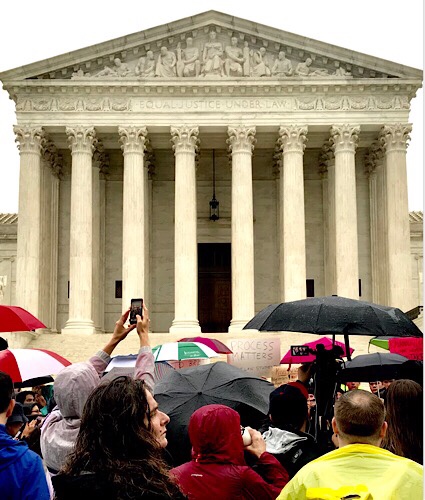
US Supreme Court, September 24, 2018
US Supreme Court, September 24, 2018
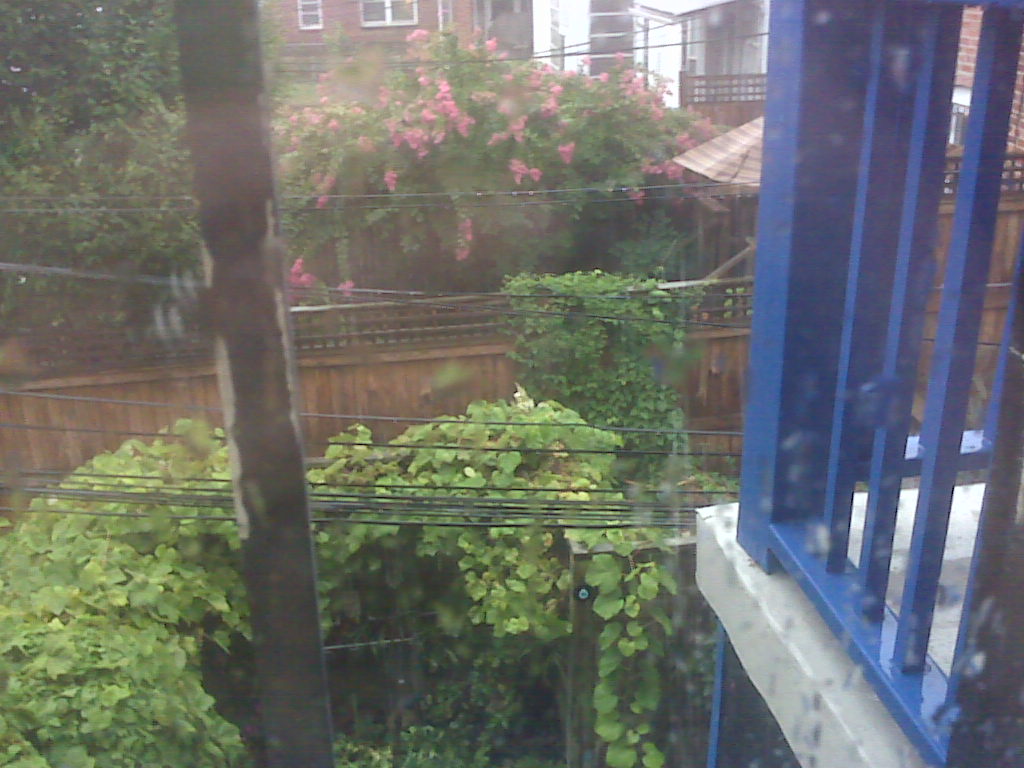
When I was out doing an errand at lunchtime, I bumped into a neighbor I haven’t seen in a long time. We did not spend much time talking; I needed to get back home to my work within the short allotted time, and she was meeting someone. “Did I just hear thunder,” she asked. The sky was thick and white with heat and “Code Orange” air. “You might have heard thunder, but there isn’t any rain with it” I replied. We talked about how much we need some good rain. The trees are really struggling. (Note: forget about cleaning any outside things with water. Forget non-edible annuals. Water established trees and perennials very deeply once a week instead of less watering more frequently. Shallow watering in drought conditions promotes growth of fungus and other pesky things.)
As gardeners, my neighbor and I notice how much rain we are getting in any given season and week. We think about whether the rainfall is what the farmers and the trees and birds and wild animals need, in addition to whether it will interfere with a child’s soccer game or a planned outing. We were at the point that we would far rather get caught out in a deluge than miss out on any chance of rain. On the other hand, those in flooded parts of the north are praying for a few warm (but not blazing hot) dry days in a row. Today’s storm is welcome and needed, though one storm does not end a drought. We need some more good ones for days on end.
I think the approach of various classes and intensity levels of asana practice can feel like a whether a thunderstorm is welcome weather. Sometimes an outrageously intense and fierce practice is what will bring me to my fullest possibility of growth and expansion. At other times, I need to step back and rest my body. Restorative and other gently therapeutic practices are what nurtures best. Sometimes, I have long, steady periods of moderate practice.
The more sensitive, aware, and knowledgeable I get about the weather outside and how it impacts life around me, the better able I am to take care of my garden. The more I am sensitive and open to the weather inside and the more knowledgeable both from study and experience of how my practice best aligns with inner and outer weather, the better able I am to live out the yoga principles I seek ever better to follow–the most important being to see the highest first and to be of service.
Peace and light, E — Posted with WordPress for BlackBerry.
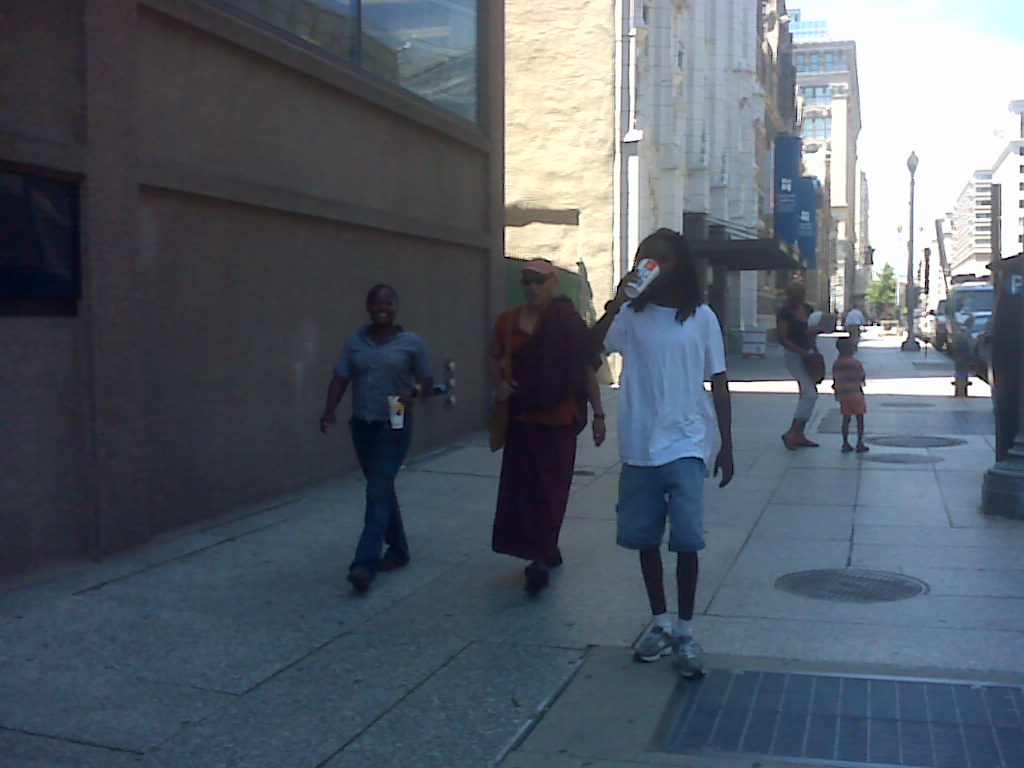
I walked over to the Verizon Center to see how the kalachakra was spreading into the space around it. Towards the end of my foray, the traffic light at a corner outside the Verizon Center changed in my direction, and I headed into the crosswalk. A cyclist going north in the southbound lane started cursing and screaming at me for blocking his way. The loudspeakers were blaring their usual commercial fare, the neon were glaringly lit even by day, the big video screens showing ads and offerings of upcoming sports events, and the tourists were jostling down the sidewalk, carrying their plastic containers full of stuff from McDonalds and Starbucks. On the other side of the Portrait Gallery was a special “market place” with silk shawls, t-shirts, silver and turquoise jewelry, thangkas, prayer wheels, and Himalayan food served in styrofoam containers with plastic forks.
I am as certain as it is possible to be that the space inside the Verizon Center is being transformed by the practice of the kalachakra for world peace empowerment inside. We cannot make others receive such an offering if they are closed and uninterested. We can, though, seek to open our own receptivity and our own hearts. As I observed my reaction to the plastics and the noise and having been cursed out when I had the “right of way,” I thought that the axiom “peace starts from within” is counsel that though we may not be able to change others, we can and are responsible for ourselves.
Peace and light, E — Posted with WordPress for BlackBerry.

Peace and light, E — Posted with WordPress for BlackBerry.
Does that include bills and advertising circulars?

Peace and light, E — Posted with WordPress for BlackBerry.
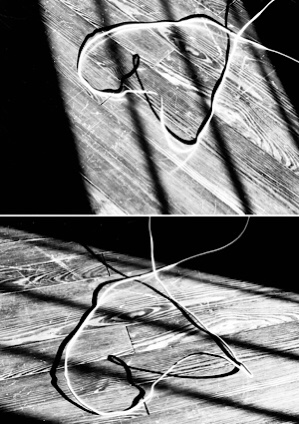
How curious that the shadow makes the open shape of the wire look twisted.
Perhaps I would find more credibility in the map if the well-meaning creators of the “U.S. Peace Index” recognized that real human beings who wish to live in peace and who are U.S. citizens reside in the District of Columbia (though perhaps they are not included because local governance of the citizens of the District are subject to the whims and opinions of elected officials from both the most and least peaceful of states and thus are governed by the whole map). It is of interest nonetheless.