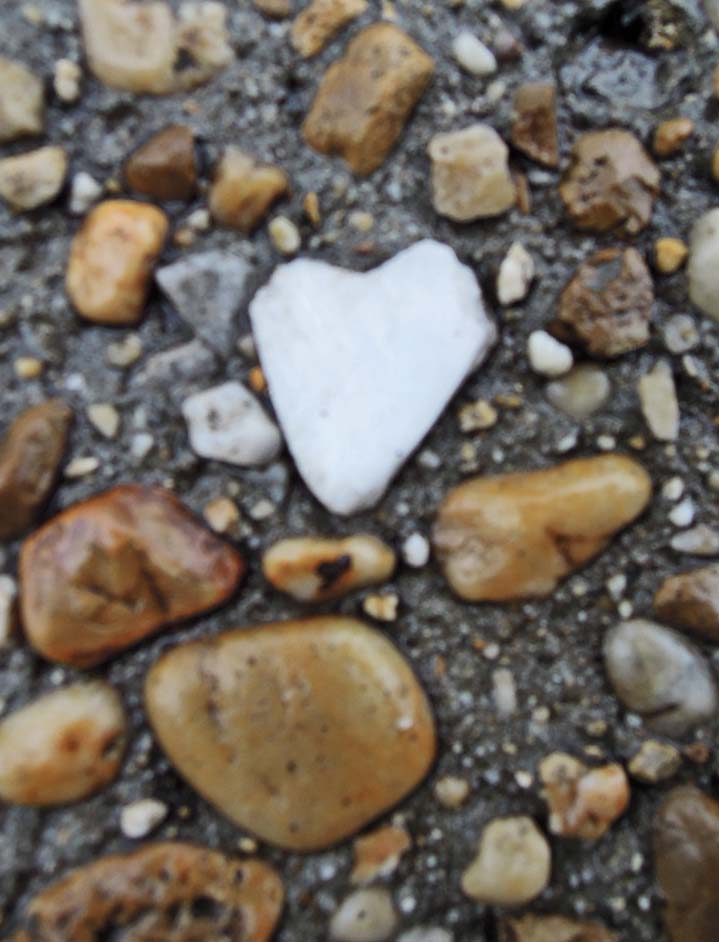
Found Exhortation

May you experience in the coming year, no matter what comes or life calls of you, moments of joy, wonder, and connection.
Peace peace peace.

I got up to stretch my legs and ease my eyes (excellent to do this a few times an hour if you have a desk job). The sky is magically beautiful and captivating out the window no matter what goes on inside (a mostly stressful, thankless day today) or what is on the ground (the view from this window is the homeless shelter, highway, and tax court).
Find a moment to change your gaze, whether it be closing your eyes to the inner world of meditation or directing them to some small or large beauty or wonder. It will help make what is hard less so–at least that is my experience.

Peace and light, E — Posted with WordPress for BlackBerry.

Peace and light, E — Posted with WordPress for BlackBerry.
A number of years ago, I attended a week-long workshop with Rod Stryker. He invited us to meditate on absolute stillness — cara sthira — meditation. Sitting comfortably, still the skin, the muscles, the bones. Draw the attention to stillness. The breath and heart will still move, but the concentration is on stillness rather than on any movement. Rod Stryker discussed the next day the challenges of this meditation, especially for those who are intellectual, who enjoy being active in the mind. I found it difficult at the time and even dreamed about the issues the meditation brought up for me. Meditating on stillness can be very challenging in a way that meditating on a mantra or the breath would not necessarily be.
I believe the origin of the meditation comes from the principle of sthira being the absolute unmovable, the essence of being (not dissimilar to Kant’s unmoved mover). We invoke pure stillness, pure potential out of which movement comes because that is part of our essence and a place where we can rest our spirit. See, for example, the Srimadbhagavatam.
I discovered absolute joy in this meditation a couple of years after I learned it. I was suffering from a severe sinus infection and bronchitis simultaneously; I joked that I was fine as long as I didn’t breath through either my mouth or my nose. In the midst of my suffering, I remembered the teaching. For a few days I stayed in the meditation for hours at a time. I found the place where I did not really need the breath. Enough came to survive, but I forgot about wondering how to breath or finding a place for it or my struggles with it. In the stillness, there was space and peace and supreme bliss. Ever since then, I have chosen this form of meditation when I have a cold, a sinus infection, or other challenges with breathing. Meditating on the breath, obviously, will not be soothing when breathing is a struggle. But when even breathing is a struggle, peace can be found in complete stillness.

What do you see when you walk down the street or into a room? Do you see more or less depending on whether the surroundings are new to you or familiar? John Friend has said that when leading a class teachers need to be able simultaneously to see the whole room (and how everything and the students are in relationship to each other in the room), each student as a part of the whole and as a whole person, and the individual alignment of each student.
What it takes to do this is the ability to be completely soft, spacious, and open in our seeing (“open to grace”) and also well enough educated and experienced to appreciate and understand the details. I think that when we can see both the big picture and the details simultaneously, we have the greatest opportunity to experience the most of life, are more likely to be able to look for the good, and to make the most positive changes.