Similar Posts

  • | | | |

    “You Who Choose to Lead Must Follow,” Argentinian Tango, and the Dance of Shiva and Shakti

    On Friday night, Professor Douglas Brooks offered a satsang that was hosted by District Kula. One of the attendees, who said that she did no yoga, but taught Argentinian tango, wanted to know about what she had heard of yoga talking about the dance of masculine and feminine because that’s what tango is all about.

    Douglas gave a quick overview of the idea of the tattvas as a foundation for an answer to the tango dancer’s question. As part of this background, he discussed the numerological aspect of the tattvas, saying that Shiva and Shakti relate like this:  one is two becomes three becomes five. The two must separate, and the space between them makes three and teaches us the one.  Because of the spaces between, we do not have one to two to four, but two (one because inseparable) to three to five.  We know the one only when we know two, and the one is therefore part of three.   (“Lovely dance of numbers; that makes perfect sense,” I thought, having a happy geekfest in my own mind.  “I’ll enjoy pondering how that might be an explanation for there being five top tattvas and not six or four and wondering whether I had even begun finding an understanding, even though what Douglas was talking about is something I have been contemplating for years in various ways and contexts.)

    Douglas then led into a description of the inseparable, inextricably intertwined nature of Shiva and Shakti.  “It is like that in tango,” the dancer interjected at multiple points.  “The better the leader, the more he is listening to the follower, thus allowing the follower to be the leader.”  Each time Douglas refined his response, the dancer offered something else about her experience with tango.  “Right, when they are dancing well, the man takes on some of the characteristics of the feminine, and the woman that of the man.  The difference between them starts to dissolve into the dance itself.”  Her eyes lit up, and she bubbled up with speech, in her excitement at finding in the tantric philosophy what appeared to be an explanation of what she experiences in the tango.

    The tango dancer and the yoga texts assign specific roles and attributes to the masculine and the feminine, and we tend to fall into that tradition when we discuss the tantric philosophy.  As much as the traditional tantrika or tango dancer might say that the masculine and feminine (when embodied) take on/have characteristics of each other, they have assigned masculine/feminine roles to play, and they are still stuck in a paradigm that keeps real humans in assigned roles.  These assigned roles impact how male and female are permitted to act in society, regardless of any recognition that who is actually, rather than technically, in charge may be in flux on different levels.

    The paradigm of tango dancing kept Friday night’s discussion within the context of typical and rigid roles for male and female, but I do not think that is a required way for us to think of how to bring the tantric yoga philosophy into our lives.  When we think of the tattvas as abstract principles, we do not have to privilege in our lives or own thinking the traditional divide between male and female roles as the basis for understanding the play of opposites (though to be true to the text in its historical context we do).

    I believe that the dance of shiva and shakti is as much about the dance between the universal and multiplicitous individuality as it is about the specific play between masculine and feminine in assigned roles.  The one is two.  The two (one) separates into three; when the two separate we discover the one (two), and after that the three becomes five.  I remember a friend saying in our college days, “There are three of us in it:  there is me, there is my loved one, and then there is our relationship.”  To be in the world and relate fully, the tattvas (and dances with partners of either sex) teach us that two are inseparable by being in relationship.  By recognizing the appearance of separation, the dance of Shiva and Shakti tattvas shows us the relationship — the oneness.  Thus, all consciousness is one, but two, and then three, and yet still one.

    How this informs me, other than enjoyable thoughts in my head, is that when we try to be spaciously and openly aware in all of our relationships of this elemental play of individual identity, separability, and indivisible unity, we see the other in ourselves and ourselves in the other.   This helps much to inspire friendliness, understanding, and compassion.  It also helps bring understanding of the leader when we are following, which it makes it easier to follow with discrimination, but without judgment.  When it is our turn to lead, it helps us know that for those who might choose to or be required to follow us for some particular project, that to lead well we must listen to the followers.  As the the Grateful Dead taught me decades ago, “you who choose to lead must follow.”

  • |

    Why Should You Care? (Computer Censorship and the Dalai Lama)

    Why shouldn’t you care?  Enjoy having freedom on the internet to read this blog, among others? To learn about what is happening in the world and to explore and expand your learning?  To connect on Facebook and Twitter?  Think 300 million people shouldn’t be censored?  Consider signing the petition to Dell and HP to tell them they shouldn’t install special blocking software in computers for the China market.

    http://act.credoaction.com/campaign/chinese_internet/?r_by=4431-391488-o3sh29x&rc=paste

  • | |

    State of the (Inner) Garden

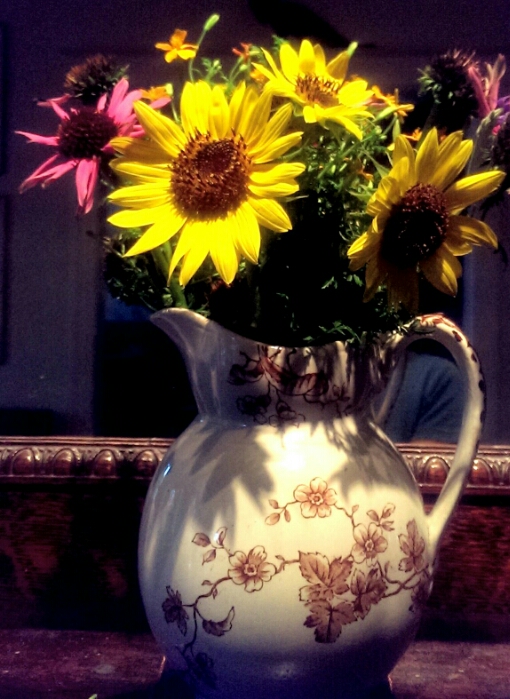
    One of the practical applications of meditating–of the yoga practice of looking within–is to be able to find beauty when things are ugly or challenging or enervating, etc.

    Knowing how to find that beauty may not change what comes at us, but it can change our outlook and approach.

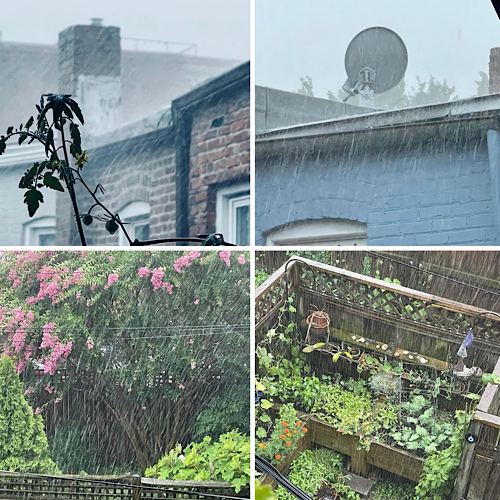
    I am easier with the freezing rain knowing that I have invited an orchid to rebloom.

    image

    image

  • | |

    The Nyaya of the Cat and the Bunny

    A nyaya is literally a recursion, something which leads back to an essential principle.  In my recent studies of meditation, we have been taught various nyayas that help to explicate the experience of meditation and the whys and benefits of steady practice.

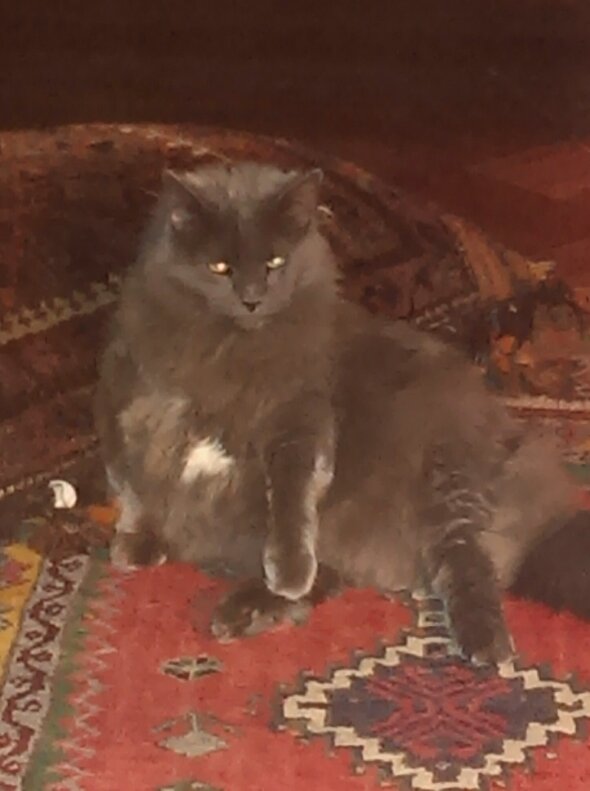
    At the place where we have been staying for our meditation and study retreats with Paul Muller-Ortega, there is a wonderful cat named Oberon.  I first met him last summer when I was walking the labyrinth just before dawn.  I’d heard a meow off in the distance.  Lonely for cat company since my Becky had so recently left her body, I called to the cat.  He came running to me and walked the labyrinth with me.  Each time I have visited, I have had some special moments with Oberon, who lives fully up to his name — Oberon being the King of the Faeries.

    Oberon loves the meditation hall and often tries to get in.  He also brings offerings.  Last winter, he brought us a mostly dead bird.  As well intended as it might have been on Oberon’s part, it was not particularly welcomed in the meditation hall.  On the final night of our retreat this time, we were reveling in the good fortune of having fellow students (and my sometimes teachers and the creators of many CDs in my music collection) Heather and Benjy Wertheimer lead us in kirtan.  At one point, I left my place to go to the facilities.  A fellow student, stopped me, “Elizabeth, the cat has a really big mouse.”  I went to look.  Oberon did not have a mouse; he had a young bunny.  “It’s a bunny I said.”  The other students who were outside were horrified.

    Without thinking, I went to him, “Oberon, drop it!” I said, as if it were appropriate to speak to the King of the Faeries as if he were an obedient dog.  He listened though and dropped the bunny, which remained frozen.  I held Oberon by the scruff of the neck.  “Go bunny; bunny run,” I said, but the bunny did not move.  I then tapped the bunny on his back at the tail.  The bunny remained frozen, though it did not appear yet to be injured.  I let go of Oberon and went to get a towel or something to pick up the bunny.  Then Oberon tapped the bunny just where I had touched it.  Off ran the bunny through the shoes neatly piled outside the meditation hall.  I caught Oberon and picked him up.  The bunny again froze, looking back at us.  At this point I was completely oblivious to anything other than the cat and the bunny.  “Bunny run; go now.”  Oberon squirmed, but did not scratch me, letting me continue to hold him.  Finally, the bunny ran off into the scrub and disappeared.  I put down Oberon.  He sniffed the trail, but then came back to me for a petting when I called.  “Thank you for the offering Oberon; I know it was well intentioned, but we are not so keen on bringing dead baby animals into the meditation hall.”  He sniffed, lifted his regal head, and sat down to wash.

    Leaving aside what my actions may have done to the fabric of the world order and the pondering I could do about the interrelationship between destiny and free will, I felt that I had been given a wonderful lesson about life and practice. Practice can bring us great freedom if we stay steady on the path.  Like the bunny, though, we can stay frozen in fear and old patterns, even when we are given a glimpse of the freedom of self we can get from practice.  As dire as things may be (or perhaps even when they are at their worst), we return to the familiar, regardless of whether we are unhappy with it, regardless of how old patterns are limiting our ability to grow.  Sometimes it is dissatisfaction with and pain from the old patterns themselves (revealed more clearly by practice already begun) that push us to go further, just as it took Oberon getting the bunny to run again for me to realize he was sufficiently healthy to be able to run off.  And just as I stayed with Oberon and the bunny until the bunny finally took his chance at freedom, the practice and the truths and freedom practice can reveal will always be there.  No matter how many times we forget or return to the stuck and the familiar, the opportunity for growth and freedom continues to await.

    When I am feeling stuck, when I am finding myself returning to patterns that do not serve, I will think about my own personal nyaya of the cat and the bunny.  I hope it will serve to keep me moving forward, less stuck, less attached to the familiar that no longer serves.

Leave a Reply

Your email address will not be published. Required fields are marked *

This site uses Akismet to reduce spam. Learn how your comment data is processed.