Untitled
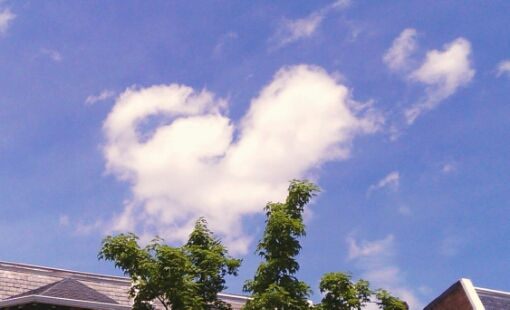
On the walk home from the dentist.

Last week I took a lovely all-levels yoga class where the emphasis was on fully engaging in the practice rather than striving to achieve a particular outward notion of what the poses should look like.
Near the beginning of the class, but after the emphasis on not striving had already been discussed, the teacher said that the ideal form in uttanasana — standing forward fold — for classical hatha yoga is with the feet together. But, he said, however, he said, but not, the teacher explained, if your back is curved like a “c” in the pose, and your lumbar vertebrae are higher than your sacrum. In that case, you want to take your feet wider apart or you will strain or injure your low back.
As I was fully into the pose, I could see the rows of students behind me. At least two fellow students in my immediate line of sight, promptly put their feet together, even though they had tight hamstrings and bulging lumbar spines and were clearly pushing themselves hard to get their fingertips to the floor. As soon as the word “ideal” was uttered, they could not hear the caution or could or would not apply it to themselves.
The evident intent of the teacher in his exposition of the pose was to give an example where the “ideal” form is most certainly not ideal and will not further the reasons we practice asana. But for so many in this society, striving is such an ingrained way of being, that yoga class can become just another way to achieve.
It was useful for me to witness how carefully one must teach to high achievers this principle of the “ideal” being what suits and not what will win accolades. How do we teach (and learn) the practice of goalless goals, of enjoying working for fitness (of the mind, body, and emotions) without pushing and striving? I’m pretty sure that invoking the principle of actionless action from the Bhagavad Gita would not have made a difference here. It seems a shame to think that the only way to protect all the students’ backs is never to mention the classical form of the pose, and to have to tell all the students (especially in a big class) to have their feet apart (or some similar alignment rule)for protection of the few who do not (or are not yet ready) to hear the whole lesson.

Peace and light, E — Posted with WordPress for BlackBerry.
Dear Friends,
It has been a mind-boggling several weeks. The magnitude of the upheavals and the impact on all of the world, including human beings, is beyond my ability to grasp. Closer up than the unfolding devastation in Japan and the escalating war in Libya, which daily adds to the bankrupting of this country and planet by our wars, I found myself supporting committed organizations, signing petitions, and writing emails saying that I preferred to be locked out of my work place with no pay than to have taken away any existing protection of the environment or provision health care for low income women. As my mind tries to expand enough to stay present and active, I am more grateful every day to have and share the practice of yoga.
Practicing helps us minimize suffering by changing how we relate to pain and the full range of human emotion. The goal, I think, is to fully and joyously engage in life with an intention to live as harmoniously as possible with all beings, including our individual selves, and simultaneously appreciate and be wonderstruck at the extraordinary and wild vastness of being that makes the time and space of the known universe seem finite relative to life (lives) on earth. When we can find both perspectives simultaneously, then we can be engaged, but not attached (vairagya).
How do we focus this intention to live fully and harmoniously in this way? In the past six weeks, I have had the unbelievably fortuitous combination of circumstances to be able to study with John Friend for three days; to attend the Mahasivaratri celebration with Douglas Brooks, Krishna Das, John Friend, Amy Ippoliti, and Sianna Sherman; Ross Rayburn for a weekend workshop at Willow Street;; Desiree Rumbaugh at a special three-hour practice the following week at Willow Street; and Paul Muller-Ortega via telephone conference.
Wow, that was a whole lot of input for my practice and contemplation, while living itself was getting more intense. But, it turned out not to be too much because of the singularity of the teachings. The message I heard from all of these teachers in their own unique and inspiring voices was that is is a good time to get down to get back to basics, or to put it another way, to explore more deeply the essential principles of practice (and of life). By getting back to the basics in the practice, we can start knowing at a deeper level what is essential for us to relate as deeply and joyously and non-harmingly (yes, I know it isn’t a word, but I’d like it if it were) on and off the mat to ourselves and all in our web of relationship.
In both my practice and my public class offerings, this Spring, I am especially focused on exploring what is essential to experience life at its most joyous while still be conscious and committed to the need for effort to change. In addition to continuing my regular class offerings, I am pleased to be offering a short course in restorative yoga at Willow Street, “Cultivating Relaxation with Restorative Yoga.”
Restorative yoga is perfect whether you are looking for a gentler way to get started with yoga, an opportunity to relax, or alternative practices for when you are feeling stiff or in pain, or a way for advanced practitioners to explore the alignment principles at the subtlest levels. We will explore a variety of types of supported postures and prop-assisted stretches to enable you to relax into optimal alignment, discover your own space of deep rest and peacefulness, and open your body. The course will also offer simple techniques to ease into sleep, find mini-relaxation moments when things are hectic, and sweeten your home practice–what could be of better service these days? Everybody welcome. 6 Thursdays, 4/21-5/26.
To get news in between the occasional email offerings or to see my latest short thoughts, please “like” my new “Rose Garden Yoga” page on Facebook.
I look forward to seeing you in person soon. As always, please feel comfortable being in touch by comment on the blog or by email.
Peace and light,
Elizabeth