Comfort Food
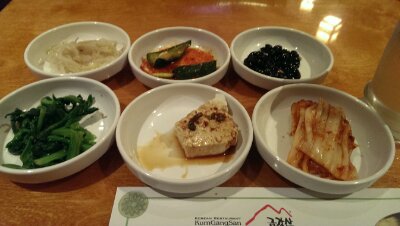
Don’t underestimate the power of comfort.
Here, kimchee with a few bites already taken
Later this evening, before or I after I sit for meditation, I expect to do some restorative yoga.
Don’t underestimate the power of comfort.
Here, kimchee with a few bites already taken
Later this evening, before or I after I sit for meditation, I expect to do some restorative yoga.
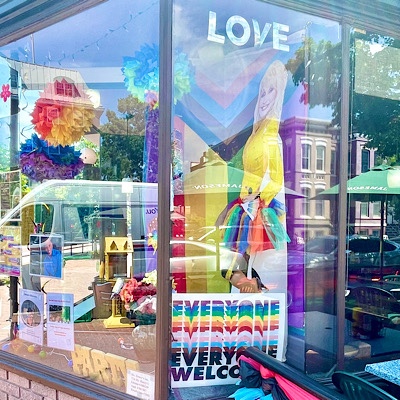
Pride is not just rainbows. It is fighting for and speaking out for justice, support, and nourishment for all.
In the yoga theory of the rasas, very roughly, the same categories of emotions can either weigh us down or move us toward spirit, depending on intensity and the way we experience them. For example, grief and compassion are on the same continuum.
With that in mind, I ask what is the exhortation to “beware,” if we are mindful and not trapped by unnecessary fears, but a reminder that we will navigate life with less trouble if we consistently are aware.

Dear Friends,
It is Saturday morning of Independence Day weekend. I have sat for my morning meditation, watered the garden, pet the cats, and done a few errands around the house. In an hour or so, I will be heading up to Willow Street to teach my noon class. As I take the time to care for garden, cats, house, and prepare to teach, I have been contemplating the concept of freedom.
In the tantric shaivite tradition, we are taught that one of the key aspects of spirit is svatantriya — ultimate freedom. We are also taught that we are ourselves inseparable from spirit, just as a drop of ocean water is no less part of the ocean for being a drop. Spirit chooses, out of its freedom and play (lila) to embody itself in forms that are limited in space and time. One of our greatest sources of suffering is feeling bound, thinking that we are stuck with who and what we are in the constraints of this mortal body, with all its quirks, forgetting our own auspiciousness.
I could get grumpy about the need to do errands and to teach on a holiday weekend. I could feel constrained from my usual activities around town by the combination of single-tracking on the Metro and the influx of tourists for the activities on the Mall, the combination of which will likely add an hour’s communiting time to teach today and to do volunteer work in Georgetown tomorrow at the Lantern Bookshop. I could choose instead to be grateful that I have a house that needs caring, a garden to water, a class that gives me great joy and abiding satisfaction to share the incredible yoga principles that have so enhanced my own life, and volunteer work that I have enjoyed for over 15 years.
I am not going to be telling anyone that we are without limitation, being as we are in time and space. We are always and perfectly free, however, to choose to turn towards the auspicious, the light, the good, the uplifting, the highest or we can turn away. We can act in ways that bring us ever more in alignment with spirit , or we can act in ways that take ourselves and that in our orbit farther from the good. The more we exercise our freedom to turn towards the auspicious, the happier and healthier we will be, regardless of the fact of life in a mortal body. That choice is our true freedom and the way to our hearts.
To help you experience svatantriya, to choose freedom of heart, there’s nothing better than some free yoga. The weekend of July 15-17, Willow Street Yoga will be offering it’s summer free class weekend. I’ll be offering gentle/therapeutics at noon on July 16th in Takoma Park. Preference is giving to new students and to returning students who have brought new students with them.
For July at William Penn House, I’m offering a two-part freebie: (1) brand new students get first class free; please invite your friends and neighbors; (2) if you are an existing student who brings a new student with you, you get a free class when the new student comes back for a second class.
Have a wonderful Independence Day, however you choose to celebrate and see you soon.
Peace and light,
Elizabeth
About a month ago, I strained the top of my hand near my wrist as I was moving from uttanasana–standing forward fold to adho mukha svanasana–downward facing dog. I was certain that I had placed my hand properly. I always place fingerpads down first and then ground my metacarpals, with the emphasis on the index finger metacarpal. My fingers were evenly spaced. It felt like perhaps I had jammed the bones or slightly dislocated them–the wrist/hand version of a sacrum “going out.”
My initial reaction was to work harder, but it was not feeling any better. I resorted to resting for a few days and then concentrating on forearm balance instead of handstand.
When I was at the weekend workshop in New Jersey last month, one of my friends suggested that I was working too hard. That was definitely on the right track. Once my hand was in place, though, what felt best was to work very strongly. During the first intermediate/advanced workshop, I was fortunate enough to be able to spend a few minutes with John Friend, who gave me an adjustment that rearranged the bones. This cleared most of the pain, but my hand was still extra sensitive.
I found myself placing leaving my hands soft and placing them with great delicacy. Before going into weight-bearing I added the actions of clawing the fingerpads and drawing the thumb and index finger together, while making sure my metacarpals were firmly rooted. No pain.
I went through this sequence of events with my Wednesday night group practice students yesterday. I showed them the difference between engaging strongly as the starting point of the hand alignment and sweetly touching, immediately followed by full engagement.
“What principle of alignment had I been leaving out?” I asked. Without hesitation, they chorused in unison, “opening to grace.” Exactly right. Sometimes practicing the Anusara principle of “opening to grace” is subtle, but it always comes first and, in my experience over the past decade of study and practice, is always essential to have the most life-expanding and holistic of practices.

Peace and light, E — Posted with WordPress for BlackBerry.