|

Moon and Holiday Lights

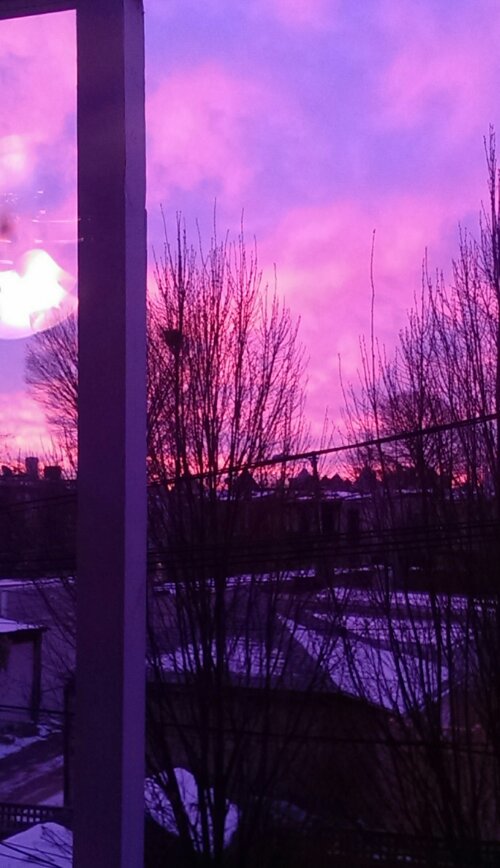
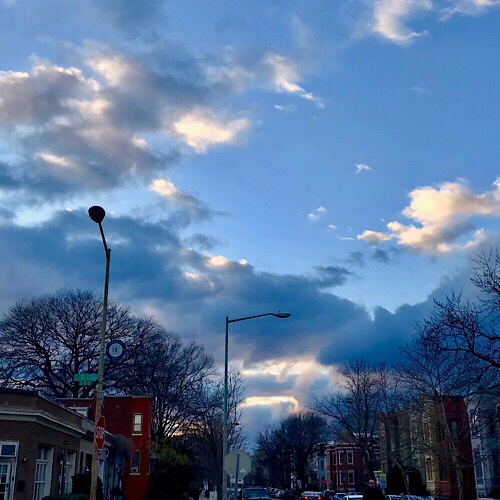
As I was leaving a holiday gathering tonight, my host saw me standing on the front stoop pointing the Blackberry at a somewhat awkward side angle. “What are you taking a picture of?” he asked. “The moon and the lights,” I replied, wishing that I could get the composition more balanced, but the row of houses was in the way.

I did not say, “I am taking a photo of the human yearning for light, for beauty, for control of the environment, shown in tandem with the glory of the moon,” but I am sure that once I showed him the photo, my host knew what I had not put into words.

Peace and light, E — Posted with WordPress for BlackBerry.

Similar Posts

  • | | | |

    In the Midst of the Turmoil

    On Saturday, along with a few thousand other people, I went to the March for Our Lives at the base of the Washington monument.  Set out before the monument, in even rows, were thousands of vases of white and orange flowers (orange for the most recent) hundreds deaths from gun violence.  it was raining off and on; the speakers were on a platform with loud audio-video, people held signs–some expressing rage, discuss, and frustration, some suggesting productive action.  Near the vases, apart from the crowd and the noise, a person dressed in purple sat in meditation.  After spending some time in the crowd and focussing on the speakers, I went and joined the person who was sitting.  We talked a bit; Satyani acts as a “mindfulness mentor” and can be found on Facebook as “Kosmique Light Meditation.”  Satyani did not identify as a protester and felt uncomfortable fighting and felt moved to act, which was what led to coming and sitting for meditation.  I suggested, referencing Gandhi and Quaker practices, that being here meditating, holding the space, connecting with those who have died while being present for the living is very much participating in protesting.

    On Sunday (before going down to the Capitol Pride Festival), I took a class on Zoom with Michele Cassandra Johnson for Patreon subscribers.  She offered a soothing/cooling practice, and invited us to consider how we can cultivate cooling and soothing while saying amidst the fire and engaged in the fight?

    To stay in it for the intensity it is now and the life-long practice it must be, that is an essential question, the answer to which will shift depending on circumstances.

    Pictures from the March for Our Lives, the Capitol Pride Festival, and some fabulous bird sightings at Kingman and Heritage Island the Friday before, are posted on Instagram and Facebook.

  • | |

    Waiting for the Bus

    Is it benign multitasking or a sign of being too attached to social media that I am writing while I am waiting for the bus home? I have taken my moment to appreciate the beauty of the Dome.

    Tonight, I think it is the former. I have twelve minutes to spare. Writing now means that I will not even be tempted to turn on the computer when I get home. I will pet the cats and wash and sit for meditation before getting ready for bed.

    I can pause, here, thinking about the synchronicity of the centering Batya used at the beginning of class I took tonight (level 4 at Willow Street, Takoma Park). She told us of a story she had heard on a podcast about a woman who described having a stroke as freeing her mind from its incessant chatter when the language center of the brain was temporarily immobilized. That quiet is, in part, what comes from a deep and consistent meditation practice. The synchronicity was that I am reading Ram Das’s “Be Love Now” (hot off the press), which is inevitably leading me to think about the interconnection between yoga practice and facing a stroke. It is not something I think of often.

    The more we are open and aware, though, the more we will see connections and synchronicities. The more consistently we practice, the more likely we are to experience the good in even the greatest of challenges.

    And now, the bus is here, and I am on my way home.

  • | | | |

    Slowing Down (and vinyasa krama)

    I wanted to share this article on “ecotherapy,” a term I had not heard before.  I found the article interesting because for years now, I have gradually practiced all the elements listed in the article as treatment for depression, not because I had been told by a therapist to do so, but because, despite my feeling the repercussions of going against the grain, I felt happier and healthier settling in one place, traveling more slowly, connecting with my pets, and tending a small patch of nature.

    These shifts in lifestyle simply feel to me more in alignment with my own nature and that of the earth.  I found, incidentally, it gave me much more time overall to do things.  People ask me how I do so much (usually referring to the day job, the yoga teaching, the gardening and cooking, the volunteer work).  Thinking of the way they live, and what they do, they ask when do I rest?  I say that my life is in fact rather slow and restful.  I rest when I meditate.  I rest when I am taking the time to make a home-cooked meal — every day when I am in town, often two or three times a day.  I rest when I am tending the garden.  I do not think of cooking and gardening as chores, but as ways to nurture myself.

    I rest when I am commuting because it is on foot or sitting on the bus or metro (note:  instead of getting anxious or angry when metro is slow, think of it as an opportunity to draw into yourself and meditate, contemplate, or read).

    Not having moved or changed jobs in years, even though there have been serious challenges with both where I live and my job, I had the time, money, and energy that would have been used up in a major upheaval, to engage in the study and practice to become a certified Anusara yoga instructor, and before that, to study  drawing and photography and to exhibit my art.  Staying in place, I continue to have time to study and to read (not watching TV helps alot, too, for finding time).  The choices are different with children in the house, but it is still possible to make choices that require less racing around for the family.

    This, to me, is a larger aspect of vinyasa krama, the art of sequencing.  When we sequence how we move in space and time in a holistic, sensitive way that honors the rhythms and cycles of our bodies and the earth’s, then we feel less trapped or overwhelmed.  When I was trying to keep up with society, I was often sad and anxious.  Now I am much less so.  I have often attributed it to these choices.  Now, I see, society has given us a word for it —  ecotherapy.  With a word coined for it and put in the press, will people feel more comfortable practicing it?

Leave a Reply

Your email address will not be published. Required fields are marked *

This site uses Akismet to reduce spam. Learn how your comment data is processed.