| |

“Meet and Greet” with Tommy Wells

On Friday night, I went to a neighbor’s house for a “meet and greet” with Tommy Wells, who is running for reelection for the Ward 6 Member of the DC Council.  I had received an email invitation and was thinking about going.  Then on Friday morning, a neighbor who is just around the corner stopped by to give me an invite in case I hadn’t gotten the email.  I decided it was important to go to connect with neighbors I already know and like, to meet new neighbors, to clarify my thoughts further about the upcoming primaries (don’t forget to vote!), and to get a chance to talk to my council member.

I walked the two blocks to the party with nothing in my pockets but my keys.  Even though I did not know the hosts, I knew or recognized from the neighborhood at least half the people who were there.  Given the purpose of the gathering, much if the discussion about what changes we would like to see in the neighborhood and the city to make our lives better (and, of course, I gave information about installing solar panels to a couple more neighbors).

Tommy Wells speaks to my condition, because he takes action in connection with his campaign slogan:  “a livable, walkable city.”  After we all had time to catch up with each other, Tommy’s campaign manager gave a solid introduction, talking about key accomplishments in the past four years.  Tommy then talked about what he wanted to do next and fielded questions, including ones about the disposable bag 5 cent fee, which has cut down pollution in the river significantly) and what is going on with the community gardeners at Virginia Avenue v. the marines.

I, like the others, came with a specific question, but I did not ask it in the group.  I was not sure that everyone present would be in agreement with me, and I did not want to cause controversy.  I asked about it afterwards, when people went back to connecting and enjoying the food.  Tommy recognized me, probably from my three-year stint as a member of the Board of Directors of the Eastern Market Preservation and Development Corporation, which coincided with the time when Tommy was getting noticeably serious about his engagement in politics as a way to make some visions actual.

“I gave up my car for the war,” I started.  “That’s great,” replied Tommy, “thank you.”  We followed up a little on living without a car in the neighborhood.  Then I got to my point.

“Every time I walk to work, it feels like I am taking my life in my hands,” I continued, after thanking the District for having put a four-way stop and zebra crossings at the intersection of Constitution Ave. and 10th St., NE.  “I did not want to bring this up in the group, because I was not sure how everyone would feel, but I have a few locations where I think it would be great to have a traffic camera.”  I then described the intersections I had in mind.  He told me that he has a task force on pedestrian issues, and that if I went to his website, I could contact Ann Phelps, who would be interested in hearing the suggestions for particular intersections.  He left me know that the District is getting more cameras and the cameras are mobile, so it would not be hard to try the different intersections suggested.

“Wow, that’s wonderfully more responsive than I’d dreamed,” I thought.  I thanked him and left to talk to other friends and to give other people time to ask their own questions.

These are the times when I truly love being part of a neighborhood.  It is not just about being able to walk to a party two blocks from your house hosted by someone you have never met and know or recognize at least a few people and find all sorts of connections and commonalities.  It is not just about sharing a way of life that holds a similar commitment to the city, even if politics, religion, work, and lifestyle in other ways are diverse.  It is also about meeting people who care and have depth and out of a true calling for service truly give of themselves to make things better for all of us.
Similar Posts

  • |

    An Opportunity

    image

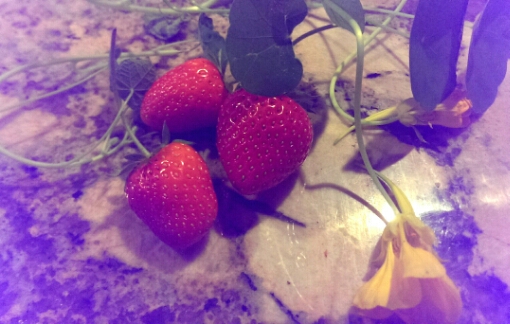
    That there were just three
    Perfectly ripe strawberries
    Gave rise to an exquisite
    Opportunity to practice
    Mindful eating.
    To enjoy the sun on my back and the weight of the berries in my hand as I picked them.
    To linger with their delicate, promising scent.
    To enjoy their shape, the patterns of the seeds, the ripe redness.
    To taste each one as if it were the only one.

  • |

    Will There Be Any Change in My Local Yoga Class Following the Events of the Past Few Weeks?

    A regular reader of this blog, who was a member of the Willow Street Yoga community until she moved out of the country, wrote and said that though she enjoyed the classes in her new home, she missed the adjustments and alignment instructions at Willow Street.  She asked in this context the following:  “I’ve been wondering lately, when teachers leave anusara, can they still use the same terminology in their classes?  If not, why not?  Does JF have a copyright on some of the words?”  I cannot speak to any copyright and trademark issues–I took a copyright class in law school, but that was 25 years ago.

    All that I can speak to is how I will continue teaching, both at William Penn House, where the only class of the week is the one I teach, and at Willow Street Yoga Center, where I will continue to teach my gentle/therapeutic class, and the other workshops and classes I may teach.  Although I have not tendered a formal resignation, I have removed the title “certified Anusara instructor” from the header of the blog.  At this time, I do not even know, given John’s decision to step down for at least some period of time, what is the organization from which I would resign or whether a renewal license would be sent.  For the moment, there is no need for me to make any specific changes in how I teach.

    If my formal affiliation with Anusara as a corporate entity were to change, the thousands of hours I have spent contemplating, exploring, and studying the principles of alignment and how to teach them will still be the major part of my asana practice and teaching.  Anusara is a deep, strong, significant  presence and has been the most significant physical and energetic component of my practice and teaching and to some extent my yogic framework for being in the world for a decade.  Given the healing and delight I have experienced from practicing in accordance with the principles, I do not expect anything to be otherwise.  As I have been taught only to teach what I have practiced and experienced myself, and not just what I have heard from a teacher or read in a book, although obviously I cannot have experienced in my own body healing for all the various challenges of embodiment that my students have experienced, how could I not be teaching from my own interpretation of the principles of alignment, regardless of a possible need to shift vocabulary?

    What will happen with the organization from a business perspective remains to be seen.  The name of the system carries a trademark.   Whatever happens and wherever I am led in my practice and commitments in the future, as have always done, I will  honor John Friend and Anusara as the source of much of my learning and it will be a recognizable influence on my teaching.  I will say in class or when I am writing that the alignment principles I have just articulated would be called [insert Anusara alignment principle] in Anusara.  This will be true regardless of how the Anusara community is reconfigured and what my relationship is to any future organizational structure.

    In answer to the question of what will my local yoga class be like now from my own perspective:  Yes, I will be offering the same alignment instructions and adjustments–and hoping to get better over time with continued study and practice.  But also, I will be even more precise about attribution, and  I will be less likely to be using the “short hand,” which I already use relatively minimally.  I have always found that a description of the actual physical and energetic aspect of one of Anusara’s “Universal Principles of Alignment” that applied to what was going on in the practice far more helpful than just using the name of the principle as a pointer to the action being emphasized.

    It is a great question, and I am sure that the answer will be slightly different for each teacher, though I trust that all are committed to offering the best yoga class possible, just as they were before.  For me, it will take a little feeling my way around the changed landscape to see how it influences my teaching.  All I can say is that I am still committed to offering yoga practices that bring healing, joy, and connection, and I hope that I can do an ever better and fuller job of living up to my commitment.  This is true wherever I teach and whatever name is given to the hatha yoga I teach.

  • | | | |

    Bare Bones of the Trees (and Pratyahara)

    One of the things that I appreciate most about winter is being able to see the bare articulation of the shape of the tree in the absence of its leaves. A dormant tree looks very different from a leafless, lifeless tree. The dormant tree still has a vibrancy to it.

    As I enjoyed the beauty of the trees in Stanton Park this morning on my walk to work, I thought about pratyahara (withdrawal of or from the senses), which is the fifth step of Patanjali”s eight-limbed path of yoga and the bridge between life and physical practice (the first four limbs consist of ethical observances and restraints, asana, and breathing practices) and meditation. I have been led to contemplate the practice and meaning of pratyahara since the last meditation retreat I attended.

    From a renunciate perspective, pratyahara entails withdrawing from that which stimulates our senses. A renunciate would simplify and restrict what he or she takes into his or her system to free the mind from stimulation and make it easier to go into a space of meditation.

    Being careful to eat lightly, avoiding the stimulation of electronic entertainment, finding a quiet place to sit, and shutting our eyes before we begin meditating is part of the practice of pratyahara that all of us who practice meditation do as a matter of course.

    From a tantric perspective, I think pratyahara fits into our practice a little differently than for someone seeking to be on a reunciate path. We may definitely choose to minimize undue or excessive stimulation because certain types or amounts of stimulation feel out of alignment with our practices. For me, more than a certain amount of sense stimulation and certain types of stimulation can numb my celebration of and experience the spirit. Refining what I take into my system so I feel better able to live fully and celebrate and see the play of consciousness is different than renouncing objects that stimulate the senses or sense impressions themselves, as being less real than spirit. It is not renouncing things as unreal; it is picking and refining what to experience to better recognize and remember spirit. For the great siddhas, withdrawal from stimulation would not be necessary because they do not lose sight of spirit by either the cravings of the senses or being overwhelmed by reactions to stimulation of the senses.

    The trees seemed to me this morning to help elucidate this principle. The trees aren’t acting out of ego or greed or yearning to find happiness from the outside because of an emptiness on the inside. They are always open to the light and the rain. In winter, when they are dormant, they are not reaching for the light and rain or hungering for spring. They are there in all of their beauty open to receive nourishment when it comes. In spring, when the leaves start to bud and open, it is because of the light and the rain, but the essence of being a tree does not change or get distorted by going inward and resting or by opening to burgeoning growth.

    When we can simply open to all that is around us as spirit (beyond my capacities except at the rarest of times), then we can be open to the fullness of what stimulates the senses and still be practicing pratyahara. As long as we are swayed from the recognition and delight of spirit by stimulation of the senses, then we need to practice withdrawing on a grosser level to help us find the space of still being where we can be in the world of the senses without being tangled up and bound by it as such.

One Comment

  1. Hi Elizabeth,

    I’m happy to look into problem intersections for you. Just let me know.

    Best,
    Anne
    202.724.8072

Leave a Reply

Your email address will not be published. Required fields are marked *

This site uses Akismet to reduce spam. Learn how your comment data is processed.