|

“This confused war”

My dear friend from college, Dan Harper, just posted the following on his website.  I feel fortunate to have a friend who inspires me to me more learned and more concerned.

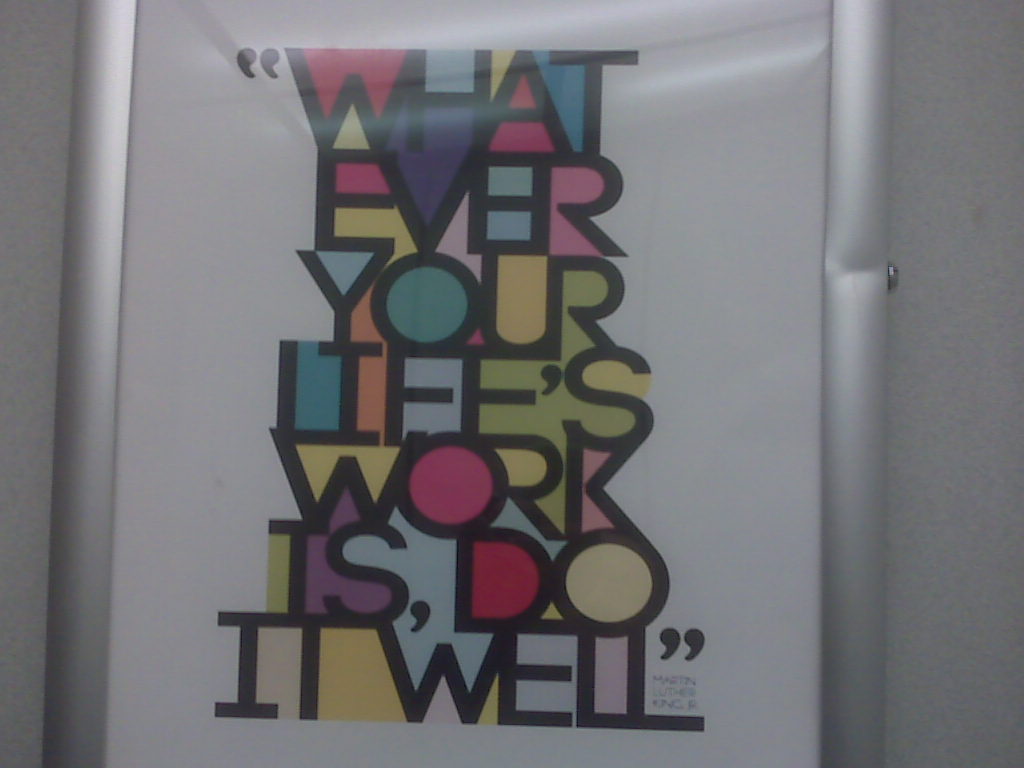
Martin Luther King would have been 80 today. On February 25, 1967, not long before he was killed, he spoke about the Vietnam War and its effects on our country. The following excerpt from that speech could easily be delivered today, with just a few minor changes:

“This confused war has played havoc with our domestic destinies.

“Despite feeble protestations to the contrary, the promises of the Great Society [anti-poverty program] have been shot down on the battlefield of Viet Nam. The pursuit of this widened war has narrowed domestic welfare programs, making the poor, white and Negro, bear the heaviest burdens both at the front and at home.

“While the anti-poverty program is cautiously initiated, zealously supervised and evaluated for immediate results, billions are liberally expended for this ill-considered war. The recently revealed mis-estimate of the war budget amounts to ten billions of dollars for a single year. This error alone is more than five times the amount committed to anti-poverty programs. The security we profess to seek in foreign adventures we will lose in our decaying cities. The bombs in Viet Nam explode at home: they destroy the hopes and possibilities for a decent America.

“If we reversed investments and gave the armed forces the antipoverty budget, the generals could be forgiven if they walked off the battlefield in disgust.

“Poverty, urban problems and social progress generally are ignored when the guns of war become a national obsession. When it is not our security that is at stake, but questionable and vague commitments to reactionary regimes, values disintegrate into foolish and adolescent slogans.”

Full text of the speech on Stanford’s Web site. Crossposted on PaxPac.
Similar Posts

  • | | |

    “It’s All Good” (and Voltaire’s Candide at the Shakespeare Theater)

    Last night I went to see the revival of the Bernstein musical version of Voltaire’s Candide, now playing at the Shakespeare Theater’s Harmon Hall (discount tickets available), which was absolutely a delight — fantastic staging and direction, luxurious costuming, enthusiastic performances.  Throughout his journey, which is beset with cruelty, hardship, natural disaster, and other mishaps wherever he goes, Candide sings of his tutor’s optimistic advice that “all’s for the best in this best of all possible worlds.”  The application of this philosophy leads to some silly results, including the Monty Python-worthy lyric “it’s a great day for an auto da fe.”

    I have a friend who, after telling me of various life challenges and griefs, inevitably signs off with the phrase “it’s all good,” though I am not sure she believes it.  I thought of her repetition of the phrase “it’s all good,” while I was watching the musical.  Later in Candide’s travels, he encounters a second philosopher scholar who (I’m paraphrasing loosely) contradicts the “it’s all for the best” philosophy of Candide’s tutor by telling Candide to just look around and he will know that things are not in fact always for the best.  A fluffier version of  the debate in the novel, as to whether things are all for the best when there is so much cruelty and devastation, is interwoven into the rest of the play.

    I’ve never had a desire to wear the t-shirt proclaiming that “it’s all good.”  I look around me, and I simply do not believe it.  I do believe wholeheartedly, though, Voltaire’s premise that we have the responsibility to “cultivate our garden.”  As my teachers John Friend and Paul Muller-Ortega espouse, we should “respond from the highest,” regardless of what we experience and encounter.  By having our response make the best of all possible worlds from things that are not evidently for the best, we bring more light into the world, whatever is our world view.  I can only hope that with steady practice of yoga and meditation, I can keep ever truer to these teachings when I am seriously challenged.

  • | |

    Lessons in Non-Attachment (Compliments of RIM)

    After 27 hours, plus or minus a few minutes–but who is counting–service was restored to my Blackberry this morning. The reason I had a Blackberry instead of an IPhone in the first instance was because I preferred CREDO (which donates a percentage of profits to causes I support) instead of giving money to political candidates I oppose as do Verizon and AT&T. CREDO now has Android-based phones, which offer all sorts of exciting features that are really quite mind-boggling, if I stop to think about it. I have never been one, though, to give up something that still works fine, just because I could get something newer and more exciting.

    It is interesting to see the articles and comments on the internet about the worldwide Blackberry outage. Much is being said about how this outage will tip users over the edge and send them out to buy another phone because of outrage because of the loss of service. Others note their attachment to the Blackberry and say they will get over the outage because of their attachment. Still others note that doing without email on one’s phone for a day or two is just not a big deal, and they, on their high horses, post mocking comments at the crackberry addicts.

    I most certainly noticed how accustomed I am to sending and receiving communications with my handheld when I didn’t have it for a day not by my choice. My other computers (plural is not a typo) were readily available, so it was no big deal. If I were to lose service when on the road and expecting to meet other people with whom I had not made prior specific arrangement, as is the case for tomorrow and the coming weekend, I would have had to make some shifts. It would have been annoying, though, and would not have felt like the end of the world or a cause for outrage (there are just too many other things more worthy of outrage).

    The episode did leave me thinking about our dependence on technology and how that dependence has shifted both for the good and bad how we relate to our family and friends and the tens of millions with whom we are connected in the ether; how we are attached to our habits and our expected ways things should work, and whether we get stirred up when things don’t go according to plan, desire, or expectations; and how a steady practice of non-attachment can help us open to make the best of things.

    Yes, I looked at the latest phones offer out of curiosity, but no, I won’t be getting one just yet. My three-year old BB is working just fine for now.

    Peace and light, E — Posted with WordPress for BlackBerry.

Leave a Reply

Your email address will not be published. Required fields are marked *

This site uses Akismet to reduce spam. Learn how your comment data is processed.