| | |

A New Landmark on Capitol Hill (Unveiling of the Dragon)

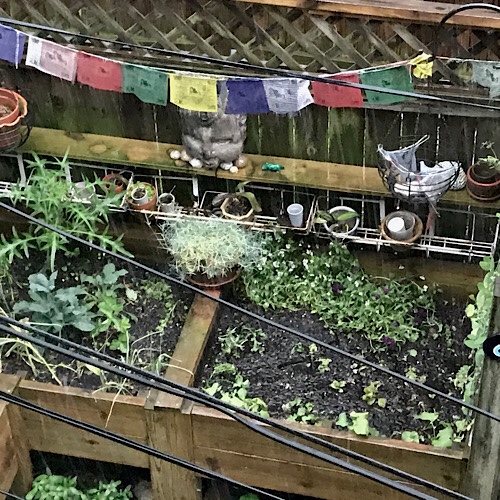
The weather was perfect last Sunday.  It had been misting and drizzling all morning.  At mid-day, the rain stopped, the temperature went up that which promises spring, and it was almost possible to see things sprouting green all around.  This promise of new growth couldn’t have been a better day for the unveiling of the neighborhood dragon.

Thanks to friends and neighbors at the Kagyu Drupgu Chodzong, there is a new landmark in the neighborhood.  I was privileged to me among those who were present for the unveiling of this most auspicious dragon for all to see and to enjoy.  Whether or not we will be able to recognize any auspiciousness it might bring, it most certainly will be bringing delight not only by its beauty as a work of art, but from the knowledge that our friends and neighbors made the effort to offer such beauty to all of us.

Much gratitude for good neighbors.


Similar Posts

  • | | |

    “Holiday Madness” (and the Yamas and Niyamas of Patanjali)

    When I googled (that should not be a verb) “holiday madness”  this morning, I got one million three hundred thousand hits.  Yikes!  Most relevant websites are about surviving shopping, over-eating, family, and travel.  Madness in such a situation is a choice.  We can choose what to consume, how much, when, and with whom.  It is a choice whether “celebration” requires consumption beyond what our financial, physical, and emotional means permit.

    The yamas and niyamas as revealed by Patanjali provide beautiful structure for thinking about the holidays.

    Yamas:

    Ahimsa–non-harming.  Don’t consume more than is harmful to yourself, those who have created what you are consuming, and the earth.

    Satya — truthfulness.  Be honest with yourself about what is right for you to celebrate and observe and what brings meaning to you as a holiday celebration.

    Asteya — non-stealing.  Consuming beyond your means, especially financially, is a form of stealing (look at what generated the recession).

    Brahmacharya — moderation (aligning with Brahma).  Enjoy the offerings of the earth in a way that uplifts rather than sickens or detracts from spirit and self.

    Aparigraha — non-greediness; non-covetousness.  Enjoy what you have without coveting or trying in a detrimental way to have what others have and you do not.

    Niyamas

    Sauca — cleanliness, purity.  Consume in a way that is healthy for yourself and the planet, that does not create illness, refuse, and waste.

    Samtosha — contentment.  Wherever you are, whatever you have, whatever is going on in your work and family life, think of that for which you are grateful, that which brings you happiness, and focus on what you have.  Contentment is a practice.

    Tapas — fire, ardor.  Be on fire to practice, to shift, to make this a life-fulfilling year of generosity and compassion.

    Svadyaya — study of text, self-study.  Take the holidays as an opportunity to deepen your understanding of yourself, society, and your spiritual beliefs and how they interrelate.

    Ishvara pranadhana — surrender, recognition of the spirit.  Let go a little.  Surrender to a sense of fullness.  Allow the abundance and recognize it as a wondrous gift. Remember the word “holiday” is really two words:  “holy day.” Make this time holy, whether or not you observe a particular religious tradition at this time of year or any other.
  • | |

    Found Exhortation (India Style)

    Only after walking along the two lane streets in a sari and sandals, sharing the road with exhaust-fume spewing buses, three-wheelers, motorcycles, mopeds, bicycles, cows, goats, dogs, street vendors, and pedestrians amidst dust, puddles, sewage, potholes, cowpats, dog shit, goat turds, and piles of organic and non-biodegradable trash, could one understand how a campaign to end the practice of littering would link it to evil.  Thanks to my fellow traveler Eric for pointing out this sign.

  • |

    On A Bus

    This morning I found myself on a bus instead of the train to New York because of the horrible accident on Tuesday.

    While waiting for the bus, I was interviewed by local TV. They were interested in reactions of people whose travel plans were impacted by the accident.

    This is roughly what I said:

    This was a horrible tragedy that need not have happened.  (I suppose it was for the best that I had not seen the news that a certain candidate for President was quoted as saying that we shouldn’t use a tragedy as an excuse to spend more money on things like safety lest I explain why we need better safety, more spending on mental health care, better treatment of employees, and more investment in infrastructure instead of lowering taxes for the wealthy, etc.) I said that the inconvenience meant nothing to me when I think of those who were on the train. I said that I wouldn’t stop taking the train. One accident would not change my commitment to using public transportation instead of the greater environmental impact of driving.

    And I said I’d had a good experience with Amtrak customer service. I didn’t say it to the camera, but I expect part of my positive experience was my recognizing when I spoke with an agent that the customer service employees must be having an incredibly stressful time of it.

    image

    View from the bus, approaching Manhattan.

  • | | | |

    Slowing Down (and vinyasa krama)

    I wanted to share this article on “ecotherapy,” a term I had not heard before.  I found the article interesting because for years now, I have gradually practiced all the elements listed in the article as treatment for depression, not because I had been told by a therapist to do so, but because, despite my feeling the repercussions of going against the grain, I felt happier and healthier settling in one place, traveling more slowly, connecting with my pets, and tending a small patch of nature.

    These shifts in lifestyle simply feel to me more in alignment with my own nature and that of the earth.  I found, incidentally, it gave me much more time overall to do things.  People ask me how I do so much (usually referring to the day job, the yoga teaching, the gardening and cooking, the volunteer work).  Thinking of the way they live, and what they do, they ask when do I rest?  I say that my life is in fact rather slow and restful.  I rest when I meditate.  I rest when I am taking the time to make a home-cooked meal — every day when I am in town, often two or three times a day.  I rest when I am tending the garden.  I do not think of cooking and gardening as chores, but as ways to nurture myself.

    I rest when I am commuting because it is on foot or sitting on the bus or metro (note:  instead of getting anxious or angry when metro is slow, think of it as an opportunity to draw into yourself and meditate, contemplate, or read).

    Not having moved or changed jobs in years, even though there have been serious challenges with both where I live and my job, I had the time, money, and energy that would have been used up in a major upheaval, to engage in the study and practice to become a certified Anusara yoga instructor, and before that, to study  drawing and photography and to exhibit my art.  Staying in place, I continue to have time to study and to read (not watching TV helps alot, too, for finding time).  The choices are different with children in the house, but it is still possible to make choices that require less racing around for the family.

    This, to me, is a larger aspect of vinyasa krama, the art of sequencing.  When we sequence how we move in space and time in a holistic, sensitive way that honors the rhythms and cycles of our bodies and the earth’s, then we feel less trapped or overwhelmed.  When I was trying to keep up with society, I was often sad and anxious.  Now I am much less so.  I have often attributed it to these choices.  Now, I see, society has given us a word for it —  ecotherapy.  With a word coined for it and put in the press, will people feel more comfortable practicing it?

Leave a Reply

Your email address will not be published. Required fields are marked *

This site uses Akismet to reduce spam. Learn how your comment data is processed.