| |

Web Version of November Newsletter

Dear ,

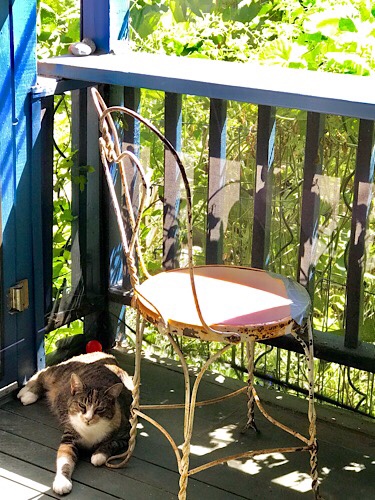
I think this is one of the most spectacular years for fall foliage that I can remember.  The world seems to be pulsating with an ecstasy of color.  I am beside myself with joy just walking around (especially when I have my camera with me).  I hope you are getting the opportunity to be outside; the work commute is definitely a great time to be able to look around (especially if some of it is walking).

Expand the inherent joy in witnessing and experiencing the transformation between summer and fall, partaking in the abundant harvest, and accepting the sweetness of a more introspective climate by practicing forward bends with twists, restoratives, and inversions.

To deepen the revelry and to find respite when needed, come join me and pretty wonderful group of people on Tuesdays at William Penn House or Saturdays at Willow Street Yoga (level 2 at 8:30 and Gentle/Therapeutics at 12 noon) on a drop-in basis.

This month’s Serenity Saturday at Capitol Hill Yoga, which is on the Saturday before Thanksgiving, will be a special treat.  Whether you are preparing to travel or to host guests or to have a quiet weekend to yourself, a long, sweet, easeful restorative practice is just right.  Feel free to bring early, out of town guests and family. To register, please go to the workshops page at www.capitolhillyoga.com.

If you’ll be in town for Thanksgiving, I hope to see you, along with friends, family, and guests of all age and yoga ability, at my 7th Annual Thanksgiving Day Fundraiser to benefit Oxfam.  It’s from 10-11:30 on Thanksgiving Day in the beautiful and spacious Willow Street, Takoma Park Studio.  As has been my practice, I will be matching all donations over the suggested donation of $20.

For more information about the classes and workshops and to catch up on the blog, please visit the website at www.rosegardenyoga.com.

Peace and light,

Elizabeth
Similar Posts

  • | |

    A Worthy Experiment

    The practices hosted by Woven History were a delightful opportunity to practice in community, come together to share with those in need (World Central Kitchen), and enjoy techniques and refuge in these trying times.  Though the practices themselves were great, it turns out, not to anyone’s surprise, that it was not ideal for the shop to have the space occupied for a non-business reason that regularly, unless it was okay to cancel at the last minute on a not infrequent basis.

    I thoroughly enjoyed the opportunity to practice in such a vibrant an interesting space and enjoying meeting new and reconnecting with old fellow practitioners.  I was also reminded of my favorite way to practice in a group, which is to have everyone say what they are there for and needing that day, whether physical or emotional, and then offer something(s) intended to be nourishing for all present.

    We’re talking about whether perhaps a once a month practice at Woven History might still work, and I will keep myself open to discovering other alternative, local spaces.

    I’m also considering offering a weekly house practice (ideally 3-4 people any given practice), as we did before the pandemic.  Please comment or email me if you might be interested and what days/times might be best for you.  I’m thinking about mid-morning either Monday or Wednesday.  It would require advance RSVP because it is in my home.  I don’t know about you, but I need more time giving myself the rest and strength I need to participate working for positive change and less time drowning in the ranting of people whose minds I cannot change.

  • | | | |

    Yes, I Knew Him (and the Maha Mrityunjaya Mantra)

    When my students arrived at William Penn House last night for class, I said, “yes, I knew him; they are both my co-workers.”  I didn’t need to say anything else.  All of them read the Washington Post and know that I work for the Department of Labor in the area of pension benefits.  I said that I was shaken by the news, and I would offer the best practice I could.  At my invitation, we worked on grounding, being heavy in the best meaning of heavy so that we would feel the stability to rise and to stay graceful and open as we practiced some challenging standing poses and backbends, leading to a modified version of natarajasana (dancing in the cosmic fire).

    One co-worker is dead (either suicide or murder in his jail cell) after having severely injured another.  Yes, we all worked in the same office for three years when I first started at the Department in 1991 and episodically have worked on common projects for almost 22 years, most recently just three weeks ago. Had it been a fatal accident or a heart attack, a few dozen of us would have been at the funeral and spoken of what we liked about him.  It wouldn’t have been the horrified questioning ourselves and each other of what possibly could have gone so terribly, shockingly wrong.  The grieving and sense of loss are no less present and real, though, for the recoiling from his last acts and the salacious and rapacious local media coverage.

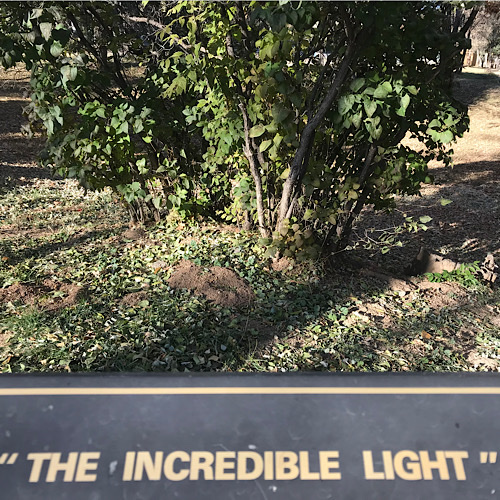
    Quaker practice has me holding those affected in the light–he and his family and she and hers, and our co-workers.  On hearing yesterday that he had died in jail, I was moved to chant the maha mrityunjaya mantra.  I was taught that chanting this mantra every day for 30 days can help a spirit cross-over.  What is spirit and to where it might be crossing was not really explained because how could it be?  But I do think chanting with such an intention can be a useful tool to help focus one’s own emotional process and healing in connection with a death.

    For some background on the mantra, you might want to start with this overview with useful links published by the Himalayan Institute (be advised that though citing to the YI because of the breadth of coverage, to get to the basic details, I needed to ignore the cheesy graphics and the use of the term “Lord” before Shiva in the linked article on what the author says are appropriate uses of the mantra).

    oakleaf hydrangeaMy co-worker gave me this oakleaf hydrangea about 10-12 years ago; his brother had pulled an extra seedling that was an offshoot  from a larger plant in his yard.  It did not start thriving until two seasons ago when I moved it to a different corner of my front garden.

  • | | |

    What If?–Part II

    Yesterday I asked about setting an intention to be blissful in every thing we do for a day. Having the intention is a good start (I might not even have thought of such an intention without my yoga practice). What I really want is to be able to manifest that intention. For me, I know that it is important for me to live more consciously and with more subtle discrimination (viveka) if I am to come close to living such intention.
    A rare few live in bliss without effort. For the rest of us, that is why we have the practices. So we can practice moving into and resting in bliss.

  • How Injuries Can Help Us Open to Grace

    Earlier this week one of my long-time students emailed me before class to say that even though she had strained a muscle in her mid-back, she still intended to come to practice because she hoped it would make her feel better.  “It even hurts when I laugh,” she added.  I emailed her back saying that I would offer alignment instructions to help with her back, but I could not promise that we would not laugh (which, of course, she reported made her laugh).  In fact, it was a class filled with much laughter, but applying the principles of alignment served to alleviate the pain the student had been experiencing.

    Towards the end of the class, as we were getting ready to move into a seated forward bend, I asked my student what alignment principles she should apply to take care of her back in the pose.  Demonstrating as she spoke, she said that she should spread her toes to activate “shins in;” take her inner thighs in, back, and apart to inner spiral her legs in order to widen her pelvic floor and enable curve in the lumbar spine, releasing some of the strain on her back; and then work outer spiral to engage and protect her back.   “Perfect,” I said, “but what should you do before those actions?”

    Another student jumped in, “open to grace.”  Quite right, but how, I asked, would you apply “opening to grace” as a physical principle in this instance?  That seemed a little like a trick question, so I explained how I use the action of “opening to grace” when I am working with an injury (obviously this applies all the time, but it especially applies both when working with an injury and when moving towards a more advanced pose than you have previously practiced.)

    Opening to grace here means being patiently and exquisitely sensitive, moving slowly and mindfully enough to be able to tell from the beginning and throughout the entire cycle of entering into, reaching pinnacle (whatever that may be under the circumstances), and getting out of the pose whether the movements are serving to heal and expand before causing more pain and injury.  Does any movement into the pose at all aggravate the injury?  Does applying the principles gently make it better?  Does applying them with fierce intensity help more?  If we start with the strongest, we will have already gone past the place where we discover that resting or just a gentle attempt would have been healing or expanding, but any more would be aggravating.  When we start with the gentle and sensitive and then move in deeper and stronger without losing the perfect sensitivity that is when true change can occur.

    It never feels good to be injured, but because of the immediate motivation to get out of pain, injuries can be great teachers of just how much practicing with true sensitivity and awareness can enable us to expand heart and mind instead of just moving towards wilder poses for the sake of some idea that we are better yogis if we can do more poses.


Leave a Reply

Your email address will not be published. Required fields are marked *

This site uses Akismet to reduce spam. Learn how your comment data is processed.